google.com, pub-5161388013621688, DIRECT, f08c47fec0942fa0 Traveloscopy Travelblog Traveloscopy Travelblog

April 08, 2018

Walking the Dog in Switzerland


#Switzerland

International travel expert, John Newton braved the icy conditions up on the Saint Bernard Pass to catch up with some friendly giants for a walk in the Swiss Alps. He was relieved to swap the mountains for level ground where he mingled with younger, mischievous furry friends. All 10 of them.

It's that time of year again when locals and tourists alike get the chance to take a walk on the wild side with the Swiss national dog, some of which have achieved worldwide fame as movie stars, starred in a host of advertisements and featured on postage stamps.

Every weekend from the end of December until the end of February, the Barry Foundation – based in Martigny, Switzerland - organises leisurely walks accompanied by Saint Bernard dogs in the mountain village of Champex-Lac.

The 90-minute walks take dog lovers around the idyllic, snow-covered alpine lake, with participants taking it in turns to hold the Saint Bernard's on a lead, while youngsters can enjoy a ride in a sledge pulled by the dogs.

"The walks are beautiful. Our Saint Bernard's love going out in the snow and coming into contact with the visitors," said animal keeper, Leah Fluckiger. "The participants sense that too. And what's more, the walks lead through the spectacular scenery of the snowy alpine plateau."

Each walk in Champex-Lac is accompanied by three Saint Bernard's. One of the heavyweight dogs pulls a specially-designed sledge for children under the age of 10 to ride on.

"As long ago as in historical times, the Saint Bernard's used to pull carts. This remains a very suitable activity for the dogs, even today," said Manuel Gaillard, who is in charge of the dogs. "We have adapted the work of pulling the dogs a little, and replaced the traditional carts with sledges."

Ideally, the walk should be combined with a visit to the Saint Bernard museum, which is the only one of its kind in Switzerland and tells the story of the dogs, the Great Saint Bernard Pass and hospice. "The museum in Martigny is open every day. Visitors can find out more about the history of the hospice dogs and meet other dogs from our breeding kennels," said Rudolph Thomann, managing director the Barry Foundation which, as owner of the breeding kennels, is responsible for the continued management of the 300-year-old breed and the preservation of the special type of hospice Saint Bernard dog.

The Barry Foundation is named after the legendary Barry, who lived at the hospice in 1800 until 1812 and is considered the most famous of all the dogs who ever provided rescue services on the Great Saint Bernard Pass. He saved the lives of more than 40 people.

The many legends surrounding his name greatly contributed to the Saint Bernard's reputation. As a result, there is always a dog named Barry at the hospice, which was founded by monks in the 11th century as a refuge for travellers and pilgrims on the 2469-metre high Great Saint Bernard Pass – for centuries an important traffic route between the economic centres of northern Italy and North West Europe – and for pilgrims on their Via Francigena route to Rome.

Large mountain dogs have been kept at the hospice since the mid-17th century to guard and protect those staying there. The Saint Bernard's were rapidly adopted as companion dogs and above all as rescue dogs for travellers who lost their way in the snow and mist. The dogs from the Great Saint Bernard Pass saved the lives of many people, averting countless deaths in the snow. The reputation of the Saint Bernard's (then called 'Barry dogs') grew throughout Europe in the 19th century – thanks to chronicles published in many languages and to reports passed on by word of mouth by the soldiers who had crossed the pass with Napoleon Bonaparte in 1800. The legendary Barry became the archetype of the rescue dog.

Today, Saint Bernard's no longer play a key role in mountain rescues. Helicopters and faster, smaller dogs get to the accident scene much quicker.

Contact them direct for special offers and discounted passes. Go to: www.champex.ch or email – champexlac@saint-bernard.ch

In Switzerland, the writer received a good licking at the Saint Bernard Museum and Hospice. After travelling to Martigny by train on a Eurail pass provided by Rail Plus, Australasia's leading international rail specialist. For more information on European train journeys, itineraries and pricing, go to www.railplus  or call (In Australia)  1300 555 003.

Story and images: John Newton

Feature supplied by: www.wtfmedia.com.au

Images
  1. Author, John Newton finds a favourite
  2. I want to lead, no I do, no I do
  3. Please throw the ball for me
  4. Who wants to be rescued
  5. Please take my photo
  6. Running rings around
  7. Yes, we are twins
April 02, 2018

Struth! Shiver me timbers, it's the coldest place on Earth


THINK THAT'S COLD – TRY LIVING HERE

David Ellis

IF you're already shuddering at the prospects of winter just around the corner, spare a thought for the 500 folk who live in the tiny village of Oymyakon in Russian Siberia – in winter up there, the mercury drops to a teeth-chattering minus 50C or colder.

So cold that saliva in peoples' mouths can freeze into needles that prick their lips, where car engines are left running outside owner's homes all night so they won't freeze and need to be thawed with a blow-torch to start next morning, and where school is cancelled only when the temperature falls below -55C.

And where when somebody dies, a bonfire has to be lit over their potential burial-site to thaw the ground so that the grave-diggers can do their job.

Oymyakon is officially the coldest permanently-inhabited place on earth, with its coldest day ever a body-numbing -67C… consider that by comparison, the inside of your refrigerator averages 4C and your freezer a mere -20C.

Visitors to Oymyakon are rewarded with complimentary "Pole of Cold" certificates from the town's official Guardian of the Cold and last January a brand new electronic thermometer installed in a public square as a tourist attraction, shattered when the temperature dropped to -62C.

The little 500-person village, that's 6.5hrs flying time from Moscow, was founded next to a thermal spring by reindeer herders who watered their animals there in the 1920s and '30s; today it has a small but growing tourism industry with attractions including reindeer tracking, ice fishing, playing in the thermal springs and experiencing that bizarre winter cold.

And while winter days get a mere three hours of daylight, in summer there's 21 hours daily and temperatures can reach a very warm 30C. For more information drop their tourist office a line on  contact@visityakutia.com


[] REINDEER that were hunted for their meat and fur in Oymyakon's early history, are now a favourite with tourists and used in hunting-down good photo opportunities. (Image: Oymyakon Tourism)

[] IN Oymyakon in Russian Siberia, if you leave your car outside overnight without keeping the engine running, here's what you'll wake up to next morning. (Image: Oymyakon Tourism)


March 26, 2018

The world's shortest place names


GOING ECONOMIC WITH PLACE NAMES

David Ellis

WOULD you believe there are nearly a dozen villages in Norway, Denmark and Sweden that have simply one letter in their name – just A for the greater majority of them, and O for one in Sweden.

And somewhat bizarrely, they're not the only places in the world that have pretty economic names when it comes to spelling: there are some thirty-odd towns, villages, municipalities, rivers and mountains have simply a single letter in their name in everywhere from Scandinavia, England, Scotland, France and Poland, to the USA, Panama, Micronesia, Madagascar, Japan, Tibet, Vietnam and Russia.

While A accounts for around a third of them – A means "brook" or "small river" in Danish, Norwegian and Swedish – there are five simply named U, another four that identify themselves only as O, three communities named Y, a couple E and rivers named the D in Oregon in the USA and Y in the north of Russia.

And in France, an historic chateau that's now a popular tourist attraction near Mortree in the north of the country is simply known as Chateau O, while in Argentina there's an eco-hippie community in Buenos Aires that identifies itself only as Commune A.

IMAGE CAPTION:

[] PROBABLY the world's simplest to make road sign – telling motorists they are leaving the village of Y in Somme in northern France. Around 100 people live in the village, referring to themselves as Ypsilonennes.

March 25, 2018

The Outback and fascinating Lava Tubes at Undara.


Len Rutledge goes 'down the tube'


Slam, bang, biff, pow! I awake to unfamiliar sounds and cautiously pull up the blind. Oh, it's just two kangaroos having a 'friendly' stand-up fight just outside my window. There's nothing unusual about that at Undara.

I'm rapidly discovering that very few things are considered unusual at Undara. The wildlife, the vegetation, the lava tubes and the railway carriage accommodation would all be considered very different elsewhere but here they are part of the amazing Undara Experience (www.undara.com.au ).

I am in North Queensland revisiting one of the most fascinating Outback destinations easily accessible from the coastal cities. I first visited Undara with cattleman Gerry Collins back in the late 1980s when he had a dream to develop this unique area into a tourist attraction. At the time he was battling the Queensland Government for approvals and was trying to save his land from compulsory acquisition.

In the end he succeeded with his dream and Queensland has a unique top quality experience for both local and international visitors. It is a wonderful destination from either Townsville or Cairns.

It takes awhile to sort out the Undara Experience. The whole package consists of accommodation, meals and facilities, tours and activities. You can cherry-pick bits and pieces but you will find that more is always better because this experience is very special.

For accommodation, we choose the beautifully restored one hundred year old railway carriages. These are set along the original Cobb & Co. coach road and are shaded by tall trees and a canopy roof. The rooms contain a very comfortable double bed, old railway seats, ceiling fans, and a bathroom.

The carriages are unique, comfortable and romantic. We love them. Other options are the permanent swag tents, some of which have their own kitchen, the caravan park and camp ground, and self-contained air-conditioned Pioneers Huts.

After settling in we go exploring. We find the free tea and coffee that is always available and then relax in the deck chairs by the lagoon pool. This is perfect after the drive from Townsville. After recharging, we go on a self-guided bush walk. There are nine tracks ranging from 1.5km to 12km return. We climb a nearby knoll and gaze over the plateau towards some of the 164 old volcanoes in the province. There is no sign of human occupation as far as we can see.

We enquire about tours and are told about the Wildlife at Sunset trip that departs each day at around 5.30pm. Naturally, we go on it. We watch the sunset while enjoying sparkling wine and cheese and then are taken to the entrance of a lava tube at dusk to see pythons and tree snakes capturing a meal of microbats as they emerge from the darkness in their thousands.

Dinner at night is at the Iron Pot Bistro. The a-la-carte menu has beef, Georgetown sausages, chicken, fish, and vegetarian noodle stir-fry dishes. Meals are large, delicious and filling. We linger over several glasses of wine and then share a 'chocolate volcano' dessert. After dinner, we relax around the campfire, enjoy the brilliant starry sky then wander back through the Australian bush to our railway carriage 'home' for a good night's sleep.

It's morning. The kangaroos have woken me so I watch nature's world through the window. There are wallabies, wallaroos, parrots, kookaburras, currawongs and magpies all happily going about the business of eating. I guess it is time for our breakfast.

We wander off into the bush along a well-defined track and soon come upon the Ringers Camp. The fire is burning, the billy tea is boiling and the freshly brewed coffee spreads its aroma throughout the camp.

Cereal, fruit, sausages, baked beans, eggs, sautéed vegetables, bacon and a variety of juices make for a great breakfast. We toast bread over the coals of the fire and spread it with honey and jam. Why do I eat so much more when in a setting like this?

It's 8am and we gather for the Archway Explorer tour. There are ten of us in the minibus as we drive to a lava tube. Lava tubes are the result of volcanic lava flowing down depressions. Eventually, the surface cooled and formed a crust but underneath the lava continued to flow.

The eruption eventually stopped and lava flowed out of the far end of the tubes, leaving tunnels beneath the land. Eventually, holes appeared when the roof collapsed on the tubes and rainforest sprang up in these dark, moist hollows.

We enter one of these depressions and are surrounded by life. The dry savannah has given way to lush vegetation. Dozens of butterflies flit around our heads. We are in a different world. The huge entrance to a lava tube is straight ahead.

Entering the tube is a wonderful experience. We come face to face with 190,000 years of history. Timber walkways lead deep into the darkness. Our Savannah Guide gives us environmental, geological and historical information on the region.

We visit two other tubes. A long wet season has raised the water table and some tubes are part-filled with water. At one, we strip to our swimwear and bathe in the clear water. We're told that this is a very rare experience, happening on average, once every twenty years!

While it is possible to experience the highlights of Undara by staying one night, a two-night stay is clearly better. This gives you time to take a second tour to a different section of the tubes, explore more of the walking trails and visit some of the other attractions in the area.

Words: Len Rutledge Pictures: Phensri and Len Rutledge

Feature supplied by: www.wtfm.media.com.au

www.LenRutledge.com

Images:

1. Train carriage accommodation
2. Breakfast is on the way
3. Entry to the tube
4. Inside the Lava tube
5. Scenic viewpoint

March 24, 2018

Return to Paradise: When Hollywood Came To Samoa

(United Artists)


How a Hollywood movie changed the lives of an entire Samoan village.

Words and images by Roderick Eime additional images as noted

In 1951, when the famous director Mark Robson and his studio scouts had finished scouring the South Pacific for a location to shoot the James A Michener follow-up, Return to Paradise, they settled on the tiny remote village of Matautu on the southwest coast of Upolu instead of their intended Hawai’i.

Wanting to present a realistic backdrop of island life, Robson chose the idyllic island of Upolu for its beautiful natural scenery, one of the film's strongest assets.

The movie was a sequel of sorts to Michener’s Pulitzer Prize-winning 1947 book Tales of the South Pacific, which had famously spawned the smash 1958 Broadway musical and film South Pacific.

A year later, the Hollywood circus arrived at the tiny village, bringing with them such stars as Gary Cooper and Roberta Haynes to begin the months of filming that would occupy the community continuously throughout the period. A great many locals participated in the production as extras and crew.

“The film crew and producers needed lots of local help,” recalls Ramona Su’a Pale Gilchrist, whose father was the chief and became the trusted quartermaster for his greatly expanded village, “because he was a trusted and honest man, he was given this great responsibility. Plus he also worked building many of the sets and props they needed.”

An American drifter comes to a remote Polynesian
island controlled by a Puritanical missionary and
turns the social life of the island upside-down.
The movie was released a year later in July 1953 and was a box office success and also launched the career of local actress, Moira Walker, who was plucked from behind the counter of the bank when the producers went to do business and she caught their eye.

In an amusing twist, the vivacious 21-year-old provoked the ire of leading lady Roberta Haynes, who played her mother for being rather too attractive.

““When Cooper would walk by me he would playfully say, ‘Hello daughter’ and kiss me on the forehead and I would flirt a little,” recalls Moira, now 85.

She recalled Haynes becoming so jealous she threw Moira’s costume in the latrine just before she was due to shoot a scene. But she laughs heartily about that now.

“The whole cast and crew including all our locals became one big family and that’s what happens in families sometimes," she laughs.

Since the movie’s releases, cast members have returned over time for reunions and anniversaries. In a famous speech made by Haynes in 2015 at a gala ball in her honour, she famously announced:

“I am so happy to be back. I remember the beach so well. It is still beautiful and the Return to Paradise Resort that has been built here is absolutely stunning. I really feel this is where I belong and this is where I want to be my final resting place.”

The spirit that evolved from those few short months in 1952 clearly left an indelible mark on the idyllic beach that faces the glorious setting sun every evening and it became the perfect setting for the resort built by Ramona and her family in 2014.

Perfect romantic setting (supplied)

Despite many tempting offers from big resort businesses the community, through their chiefs, declined each application, preferring to retain customary ownership for the benefit of their people.

Then finally, a group of Samoan investors provided support for Ramona and in 2011, the work began. The jungle which stretched down to the beach was cleared by hand, and the 100 per cent Samoan owned and operated resort you see today is proudly staffed and operated by the extended family.

The movie is screened every week in the bar and the beach, with its very recognisable rocky outcrops, can be seen from every table. A wedding chapel has been added to the tiny headland where couples receive the blessing of the waves along with their vows.

“Even though we have a modern resort here on the beach, the essence of our land remains and every guest experiences the same special Samoan hospitality that captured the imaginations of Hollywood all those years ago,” says Ramona as she gestures toward the horizon.

Ramona Su’a Pale Gilchrist in front of the beach where the movie was filmed (RE)

Ramona is clearly onto something as the guest feedback is overwhelmingly positive. The critical TripAdvisor website rates Return to Paradise Resort a whopping 4.5 with such comments as “our week at Return to Paradise is our new benchmark” and “surpassed all expectations”.

Ramona invites you to experience for yourself the unique serenity of Lefaga Samoa.

“At Return to Paradise Resort, you can expect to experience our Samoan way of life through activities such as basket weaving, umu (underground cooking), prayer sessions, island night bands, visits to nearby villages and even thrilling fire dances.  While some of these are showpieces, we are far more than that, and we hope you see and learn, and most importantly, feel the real ‘Samoa’ in every personal conversation, smile and encounter while you stay with us.”

FACTS

The resort offers 59 rooms in the following types: Suites, Kitchenette, Non-Smoking Rooms, Family Rooms, Accessible rooms

Ideal for romantic escapes, weddings, conferences and meetings

Relax at Return to Paradise Resort (supplied)


There a wide range of ethical local tours available including swimming with turtles in a secret location and snorkelling in the village's own giant clam reserve. Open daily for Breakfast, Lunch and Dinner. The Bar opens 10am-10pm daily. Day guests are welcome and may swim at the beach if dining in the restaurant.

For bookings, please email: reservations@returntoparadiseresort.com


Samoa Airways flies to Sydney from Apia every Thursday and Saturday (OL855/856) see www.samoaairways.com or your preferred travel agent

For information about tours and activities in Samoa, see www.samoa.travel


March 18, 2018

Sailing Mekong’s Past In The Present


David Ellis cruises from Vietnam to Cambodia.

ABOUT to step aboard the little riverboat Toum Tiou 1 in Vietnam's Ho Chi Minh City for a trip up the mighty Mekong River to Siem Reap in Cambodia, we suddenly baulk at what we see lays before us.

For surely if everything else aboard this tiny vessel is like that which we are now facing, and amongst which we are soon to be immersed for a whole eight days, we wonder should we rather be kitted-out in khakis and pith helmets from another era, and not our so-recently acquired fashions of the 21st century?

Because although launched just sixteen years ago in 2002, Toum Tiou 1 was built in the traditional style of Mekong riverboats of colonial France many, many decades past, and delightfully finished and decorated throughout in the tasteful style of those eras gone by. This includes lacquered wooden panelling, brass fittings, wickerwork armchairs for relaxing on top-deck, almost antique furnishings, and traditional woven straw wall coverings to mention just a few.

And all of which contribute to a sailing vacation that's a virtual yesteryear-on-water, and which most who've already indulged, say is simply unmatched.

At a tiny 38m in length, this little gem carries just twenty guests in ten cabins, and because of her shallow draft of 1.7m can sail at literally arm's length of riverbanks and beaches, jungles' flora and fauna, and villages and historic buildings for wonderfully up-close viewing and picture-snapping.

And that shallow draft means she and sister-ship Toum Tiou 2 are the only passenger vessels that can sail the Mekong unhindered for a near 500km from Ho Chi Minh City to Siem Reap, as others on the river have to transfer passengers to buses in places where waters are too shallow for them to cross.

We had chosen an 8-day sailing on Toum Tiou 1 that was a sell-out with almost half those on board French, and the remainder Australian and English, all pampered throughout by an enthusiastic Captain, officers and crew determined we should go home with lifetime memories.

And our waiters manning the dining areas both indoors and out, quietly responded to the mix of nationalities amongst us, setting up two large tables in each area, one for those French guests who basically spoke no English, and another for we English-speakers who basically spoke no French.

Plus dining itself was a delightful foray into Vietnamese and Cambodian fare of the regions through which we passed daily.

And awaiting us at each day's end was our comfortable air-conditioned cabin with king bed and a hair-dryer for m'lady.

Days could be spent ashore with fascinating land adventures led by Toum Tiou's own Cruise Director, who shared an extraordinary knowledge of everything from village life, to the histories of fabled temples and pagodas that we visited (yes, there is a difference between a temple and a pagoda – but we won't go there!)

And sights ranged from the amazing ruins of Angkor Wat, at 163ha (402 acres) the largest religious monument in the world, to buzzing markets with their diversities of fruits and vegetables, seafood and meat products.

Plus we poked our noses into village life on shore and on stilts over the river, and probably most memorable of all, dropped into a class at a tiny school where the kids' boisterous welcome for us was nothing short of eye-watering.

And when finally back on board Toum Tiou it was cold drinks on the upper deck and a relax on day beds or those wicker chairs for a chat with fellow guests under another spectacular sunset…

Toum Tiou 1 also offered onboard cooking classes where we learned a bit about how to whip-up Asian delights on our return home, talks were given on the region's history and culture, and there was even gear aboard for a spot of fishing too.

Certainly one of the more unusual and memorable of on-water holidays, 8-days aboard the little ten-cabin Toum Tiou 1 starts from USD$3699 for a double/twin cabin for two (for one person from USD$2799,) including meals, some drinks, daily and sometimes twice-daily shore excursions with English and French speaking guides, and entrance fees.

For more information or to book, see your licensed travel agent.

http://www.toumtioucruise.com/

Words: David Ellis

Feature supplied by: www.wtfmedia.com.au

Images: As supplied

1. Toum Tiou 1
2. Stateroom
3. Upper Deck
4. Local produce to market
5. En-suite
6. Captain at the helm

March 10, 2018

Cuba Calling


By Glenn A. Baker

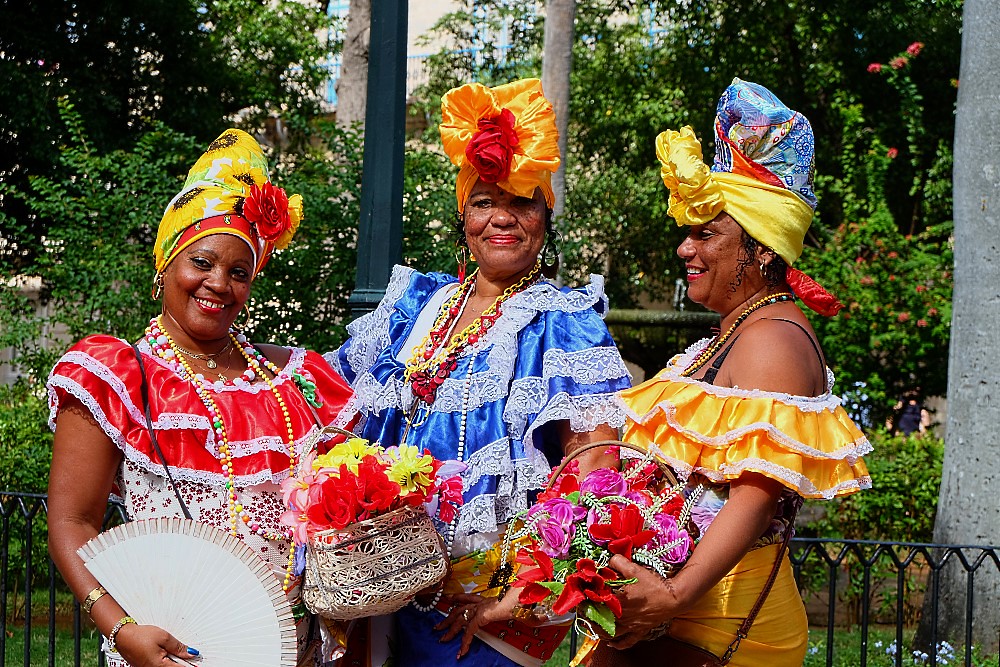
There is a constant, inescapable sensuality to the entire Cuban experience. For all the crumbling decay, the tarnished and faded glamour, and the shortages and sacrifices of a country whose economy virtually collapsed when the Soviets cut off the drip-feed more than a decade ago, there is nothing dormant or moribund about the place.

Italian Treat: Amalfi Coast and Capri with Tauck


It’s the haunt of celebrities and the glitterati with an ancient past. Italy’s Amalfi Coast will delight the visitor.

Words and images Roderick Eime

The last time I toured Italy extensively, I was sleeping on trains, rummaging through my backpack for loose lire and generally travelling rough. Okay, at 17 you don’t know any better and it’s all just one great adventure.

Now, 35 years and several full passports later, I’m ready to surrender to the wisdom and experience of one of the world’s great tour companies. Tauck, a US-based family-owned brand, have honed their product to a razor sharp edge over 90 years of continuous operation and I’m joining them for their much-praised “Week in Rome, the Amalfi Coast and Capri” tour.

Our entire group of 22 fits easily onto a single coach, so there is no crushing or squeezing and our tour guide, Roberta, is as authoritative as she is charming, seamlessly taking charge of our cavalcade as we rollick through this most picturesque region of Italy.

Like wide-eyed school kids on an excursion, we stood at the wharf at Naples waiting for the Capri ferry. This legendary island sits like a bejewelled apostrophe at the head of the Amalfi Coast, further to the east on the Italian mainland.

Our hour-long ferry ride deposits us and several hundred daytrippers at the Marina Grande on the northern shore and in the shadow of the towering cliffs of Monte Cappello and Monte San Michele, the larger of the two soaring to more than 500m. Capri (pronounced CAR-pree) has enjoyed resort destination status since Roman times when Emperors Augustus and Tiberius erected their own holiday villas and gardens well before timeshare was ever a concept.

Marina Grande with Monte Capello in the background, Capri (RE)

Even in June, shoulder season, the tourism machine is in full swing. Convertible taxis, the signature transport of Capri, are loading furiously at the wharf. Roberta ushers us into prearranged vehicles and we head up the steep, narrow laneways to the Piazzetta where the big brand names occupy niches and slots in the miniature shopping district, cheek by jowl with pizzerias and gelato stalls.

It’s no stretch of the imagination to picture Sophia Loren or Gina Lollobrigida swanning about the designer boutiques as men swoon and collapse at their feet. There are no bargain shops here and neither is our hotel, the Grand Hotel Quisisana, where the bellboy challenges me to produce a room key, lest I be some lowly blow-in from the streets outside. A simple beer will set you back 8 euro.

Fortunately, great pleasure can be achieved by simply walking the cobblestoned footpaths, taking the chairlift to the summit for a magnificent view or visiting any of the historic sites. Make sure you leave with a bottle of famous limoncello liqueur or floral perfumes from any of the eager vendors.

The Amalfi Coast looks for all the world like one big movie set. The serpentine roads twist and curl around the precipitous hills, each corner revealing a new and breathtaking view. Clearly our coach captain has driven these byways before, as he guides the big vehicle smoothly around the sharp bends and forks avoiding the self-drive tourists with one eye on their maps.

Positano (RE)

The city of Positano has had more leading roles than Brad Pitt, with notable appearances in ‘Under the Tuscan Sun’ and ‘Only You’. In 1953, the writer John Steinbeck waxed lyrical about the town in Harper’s Bazaar, cementing the place forever in tourism folklore.

‘Positano bites deep,’ he wrote, ‘It is a dream place that isn’t quite real when you are there and becomes beckoningly real after you have gone’.

Similarly, the ancient city of Sorrento can boast a modern history of more than 2500 years when the Osci people settled there before the Romans swallowed them up.

In a fitting farewell, we head back to Naples via the sea, watching the traffic squirm on the ledge-like roads that join the settlements perched on the impossible cliffs overlooking the Mediterranean Sea.

In the distance, is that a whiff of smoke from the ominous peak of Mount Vesuvius? Let us not forget just who is in charge around here.

Doing it:


TAUCK’s signature tour is ‘A Week In The Amalfi Coast, Capri & Rome’

See www.tauck.com.au

Call 1300-732-300 or your travel agent

Support Traveloscopy - Support Responsible Travel.

Traveloscopy is a freelance journalism enterprise supporting the tourism and travel industries. We aim to encourage people to travel thoughtfully and responsibly and also support sustainable initiatives within the travel sector. You can help us cover our operating costs, even if in just a small way.

Last 30 Days' Most Popular Posts