google.com, pub-5161388013621688, DIRECT, f08c47fec0942fa0 Traveloscopy Travelblog Traveloscopy Travelblog

October 18, 2015

Anantara Golden Triangle Elephant Camp & Resort - showering with elephants

Showering with #Thailand’s gentle jungle giants

Elephant shower at Anantara Golden Triangle Elephant Camp & Resort (supplied)

by Ian McIntosh

The small, brightly painted traditional Thai long tail boat was racing along the mighty Mekong River so quickly the ripples sounded like we were smacking rocks. We flashed past the huge Buddha marking the Golden Triangle – ahead was Burma, to my left Thailand and to the right Laos. And here is our resort, my lovely guide Tuk yelled in my ear. She was pointing to a hill of thick bright green jungle and a rather decrepit looking landing. Resort? Not that I could see.

September 28, 2015

The story of Mary Watson and Lizard Island


OUR LITTLE KNOWN HEROINE MARY WATSON

David Ellis with Roderick Eime


IT was 134 years ago this month, on October 12 1881, that young English woman Mary Watson died in the most horrendous of circumstances on a remote far north Queensland island, her agonising death writing her into history as our first and most extraordinarily courageous, yet little known, folk heroine…

Born in Cornwall in 1860, Mary migrated with her family to Maryborough in 1877. There, while still in her teens but with a good education, she ran a small private school for a short time before becoming governess to the children of a local publican, and later moving to remote Cooktown to open another private school there.

She met in Cooktown a Captain Robert Watson, a Scotsman who ran a beche-de-mer (sea cucumber) fishing business from Lizard Island some 100km away, and after a brief courtship the couple married, Mary giving birth to a son, Ferrier in June 1881.

In October, with Captain Watson away fishing, Mary was in the family hut when some mainland Aboriginal people landed on the island, and while what actually happened will never be known, the Watson's Chinese gardener, Ah Leong was speared to death and the house servant, Ah Sam severely wounded before the tribesmen withdrew when Mary fired a rifle into the air.

To the Aboriginal people, Lizard Island was revered in mythology and Dreamtime stories as a sacred place "owned" by the myriad goannas that abounded there, and which were a source of special food and medicine.

Realising the peril she was now in, Mary and the wounded Ah Sam loaded what food and water they could into a roughly 1300mm (51 inch) square by just 610mm (24 inch) deep cast iron water tank that Captain Watson used for boiling beche-de-mer, squeezed themselves and baby Ferrier aboard, and began paddling in search of a safer island.

For five days they paddled and drifted under a blazing tropical sun, occasionally landing on reefs and islands – but at each island, finding signs of Aboriginal life they moved on, critically unable to have collected fresh water. Finally on reaching the unoccupied No 5 Howick Island – an amazing 65 kilometres from where they had taken off in their water tank – they staggered ashore in the stifling heat, their water totally gone, little food remaining, and all in rapidly deteriorating condition.

Remarkably, throughout their ordeal Mary maintained a daily diary, cataloguing their journey with brief, unemotional and uncomplaining entries. And on October 12 1881, five days after landing on the island, she wrote her last tragic message: "Still no rain. Ah Sam preparing to die. Baby more cheerful.  Self nearly dead with thirst."

It was not until January 1882, three months later, that the crew of a small cargo ship seeking shelter from a storm found the body of Ah Sam on the beach, and those of Mary and Ferrier in the tank that was now full of rainwater.

All were taken back to Cooktown where 650 people attended their funerals; Mary Watson was just 21 years of age and her son 4 months. A diary she kept on Lizard Island and the one she wrote aboard their little water tank, are in the John Oxley Library within the State Library of Queensland, and the water tank itself in the Queensland Museum.

Today Lizard Island, 250km north-east of Cairns, is a protected National Park and home to one of the most luxurious resorts on the Great Barrier Reef. The resort occupies but a tiny portion of the island, with the remainder grass and woodlands, mangrove swamps, white sand beaches (twenty four) and a 'mountain' that rises 359m above sea level.

There is also a National Parks campground with toilets, picnic tables and gas barbecue – but campers or other visitors to the island are not permitted to enter the Resort.

Lizard Island Resort offers forty indulgent rooms and suites, a legendary spa, reef diving and snorkelling that's amongst the Barrier Reef's finest, game fishing, visits to an extraordinary 'Cod Hole' that's frequented by massive 100-plus kilogram Potato Cod, and beach and bush walking.

Access is by small plane only from Cairns or Cooktown, or private boat. Coral Princess Cruises also visits the island (not the Resort) weekly as part of Great Barrier Reef itineraries.

For more information www.lizardisland.com.au

                                                   ………………………….

PHOTO CAPTIONS:

[] THE TINY water tank in which Mary Watson, baby Ferrier and house servant Ah Sam spent five days escaping from Lizard Island. (Queensland Museum)

[] PORTRAIT of Mary Watson – she was just 21 when she died. (Queensland Museum)

[] LIZARD Island as seen from atop its highest point. (Roderick Eime)

[] INDULGENCE: Lizard Island Resort is one of the most luxurious on the Great Barrier Reef. (supplied)


August 31, 2015

Struth! Jumping to conclusions


High price for a liner's one-liner


IN his continuing search for the more weird and wondrous in the world of travel, David Ellis says a British family – three of them in their 80s – have learned that frivolous one-liners can prove costly… in their case being put off the luxury cruise ship, Royal Caribbean's Adventure of the Seas, less than 24 hours after  going aboard.

Two of the octogenarians had been shouted a return-week from England to Europe by their daughter and son-in-law in celebration of their diamond wedding anniversary, with daughter, son-in-law and his 89yo mum going along as well.

But on the first night the celebrating husband and father (85) complained to the Maitre d' at dinner that he'd got paint on his trousers from work done in his cabin just before they'd gone aboard… and that the cabin's wet paint was enough to make him want to "jump ship."

The "jump ship" comment soon reached the Bridge – where duty officers read it as a possible "jump overboard" suicide threat.

So the family were deemed a "security risk," met with, and told they were to be put off next morning at the ship's first port of call, Zeebrugge in Belgium.

A security guard was also stationed outside the parents' cabin for the night with regular torchlight checks inside as well, and next morning the entire family put ashore. The shipping line subsequently refunded all five cruise fares in full, met the cost of replacing the paint-damaged trousers… and even paid all the family's travel expenses back to the UK.

An apology? Nope.
                                                      

St Michaels in Maryland - home to the Cannonball House


YANKEE TOWN THAT FOOLED THE BRITISH
David Ellis

IT'S over 200 years since the locals of little St Michaels in Maryland employed a wily scheme to save their town from attack by the British Navy during the relatively little-known War of 1812, and which led to St Michaels to this day being known as "the town that fooled the British."

Founded in the mid-1600s as a trading post for pioneering tobacco farmers and trappers, St Michaels later went on to become an important shipbuilding town on America's north-east coast, with a half-dozen yards of significant size by the 1800s.

And when America declared war on Great Britain in June of 1812 in its first-ever such aggression on another nation, the British saw the importance of putting a stop to the output from those St Michaels shipyards.

(The reasons for the War of 1812 were many and convoluted, to the forefront being America's anger at Britain's meddling in its fledgling international trade, the capture of American merchant ships and the impressment of their crews into Britain's Royal Navy, and Britain's support for Indian tribes opposed to white American expansionism.)

So pre-dawn on August 10th 1813 the British moved a small fleet carrying 300 red-coated marines into Chesapeake Bay on which the St Michaels shipyards were located, and in darkness sent these men ashore. Long anticipating such an attack on their yards, the residents of St Michaels got a few rounds away from some cannons they had along their harbour-front, but knowing they were greatly out-numbered, fled back into the darkness.

Delighted, British Admiral Sir George Cockburn recalled his men to their ships, declaring he'd wipe little St Michaels off the map with cannon fire from those vessels. And it would be with the assistance of the townspeople themselves – whom he noted to fellow-officers, had foolishly left so many lights on overnight in homes and shipyard buildings that they made for perfect targets.

After firing off some hundreds of cannonballs and seeing the number of those lights diminish with each salvo, Admiral Cockburn declared his job well done and sailed off into the sunrise without even bothering to check the extent of damage he'd caused.

Had he done so, he would doubtless have been mortified to find that for all his effort, he had in fact hit just one building. And that was a private house through whose roof a cannonball had crashed into the attic below, and from there bounced down the stairway to land at the feet of a very shocked Mrs William Merchant and her baby daughter who'd been awakened by the bombardment….

And the reason for so little damage to St Michaels township was simple: the canny locals had actually turned off every light in town, and the myriad "town lights" Admiral Cockburn had seen were in fact hundreds of lanterns those townspeople had lit and strung amid trees on a hillside behind their blacked-out township…

So Admiral Cockburn had simply sent his cannonballs sailing harmlessly over the darkened settlement into that forest behind St Michaels, earning it the title "the town that fooled the British…"

Two hundred and two years on, Mrs Merchant's house is still a private residence, although officially listed as the Cannonball House on America's National Register of Historic Places.

Shipbuilding in St Michaels waned in the later part of the 1800s to be replaced with oyster harvesting and crab catching, and today tourism is the major industry in this little town of a mere thousand or so leisurely living folk.

Once listed Number 8 in the Top Ten of Romantic Escapes in the USA, St Michaels has also been described as "a treasure on Maryland's Eastern Shore" with colourfully picturesque Colonial, Federal and Victorian era homes, churches and public buildings, and prides itself on its rich maritime heritage.

Visitors can also take to the local waters for daily sightseeing tours on an historic 1886 oyster dredging sailboat, the Rebecca T Ruark that's a skipjack for which St Michaels was once famed for churning out from its shipyards, or join organised day fishing trips on others.

For foodies, local restaurants put great emphasis on the local crabs and oysters still harvested and caught today, there are numerous boutiques, and for the curious a fascinating maritime museum and excellent antique shops.


                                                           …………………..

PHOTO CAPTIONS:

[] ST Michaels today has just a handful over a thousand residents, but tourists flock
   there by their tens of thousands annually. (TheTravelsOfKevin.com)
[] ITS once busy shipyards long gone, St Michaels' harbour today provides a haven
   for pleasure boat owners from a wide neighbouring area. (St Michaels Marina)
[] THE historic oyster dredger Rebecca T Ruark was built at St Michaels in 1886 and
   is today a popular sightseeing vessel on the harbour. (skipjack.org)
[] THE Cannonball House was the only building struck during the British raid on the
   night of August 10th 1813; a private home today it still attracts the curious to view
   from the outside. (Ellen Coxe Maryland Historic Trust)  
[] ADMIRAL Sir George Cockburn who led the British raid that hurled hundreds of
   cannonballs harmlessly over St Michaels into a forest of lantern-lit trees.
   (Wikipedia)
[] SEAFOOD restaurants lure lovers of oysters and crabs to feast on these local
   delights. (StMichaelsMD.com)


August 28, 2015

Macau: The Stage is Set

#macau


Beyond the glittering halls of your 21st century resort, a city resplendent in history and culture awaits.

Words by Roderick Eime

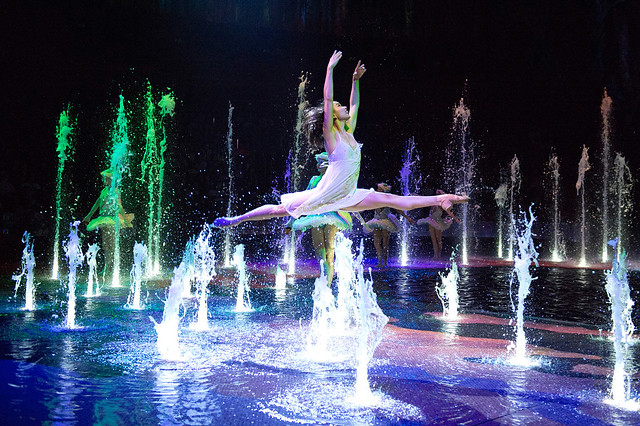
Their arms flail wildly while their feet kick savagely at each other. Higher and higher they go, 20 metres, 25 metres, toward the dizzyingly high ceiling. The hero, in white of course, strikes the villain in the chest and he falls, arms and legs twirling, into the deep pool below. The 2000-strong crowd gasp, then gasp again when the hero falls too. Some stand to get a better look while others just cover their faces.

But don't worry, it's all part of the show here at City of Dreams' spectacular $250million production, The House of Dancing Water, which plays to capacity crowds five nights per week. The award-winning 85 minute show, which opened in 2010, has enthralled more than 2 million guests with its 80 performers who high dive, motorcycle jump, leap, contort and dance around, in and on top of a 17 million litre pool.

House of Dancing Water - Macau

This awe-inspiring, super hi-tech show is the glittering centrepiece of the integrated entertainment resort, City of Dreams, opened in June 2009. With some 1400 guest rooms in three sprawling luxury hotels, plus more than 20 quality food and beverage venues and 175,000 square feet of sparkling retail space, there's almost no need to leave the resort. But in a city as rich in heritage and history as Macau, you'd be missing out on a wonderful sightseeing and cultural experience if you didn't venture out.

Even though Macau is best known for its rich Portuguese heritage, the town’s maritime history dates back to the 5th century and earlier when coastal traders and fishermen used Hoi Keang, as it was then known, for resupply.

Macau’s unusual European cultural fusion has also spawned a range of colourful cultural events including arts, music and fireworks festivals, a dragon boat regatta and a marathon foot race. Golf and the legendary Guia Motor Race and Macau Grand Prix complete the international sporting calendar.

Furthermore, the United Nations, through their cultural arm of UNESCO, recognised the very special significance of the architectural heritage of Macau by listing the centre of the old city as a World Heritage site of cultural significance. The imposing centrepiece is the preserved façade of the Cathedral of Saint Paul. Built during the last decade of the 16th Century by the Jesuits, the building was destroyed by fire in 1835.

Rainy days are plenty around the middle of the year, a perfect opportunity to take in any of Macau's superb museums. For MOP$25 you can buy a museum pass for entry to the Grand Prix Museum, Wine Museum, Maritime Museum, Lin Zexu Museum, Museum of Art and Museum of Macau.

And for a grand finale, if you want to outdo the brave high divers at The House of Dancing Water, you can strap yourself in for a 233m plunge off Macau Tower in the world's highest commercial base jump. There are thrills aplenty in Macau.

Macau Government Tourist Office www.visitmacau.com.au

August 26, 2015

Rent your own private island


Have A Private Island All to Yourself with These 13 Rentable Estates Available to Book Through TripAdvisor


With the glimmer of spring just breaking on the horizon, TripAdvisor®, the world's largest travel site* is showcasing extraordinary private islands you can book for your next trip.

From the idyllic African island of Mauritius, to the rugged backdrop of the Isle of Skye, TripAdvisor Holiday Rentals offers more than 720,000 properties worldwide, giving Aussies a reason to daydream at their desks as we wait for summer.


1. VILLA L'ILOT – MAURITIUS, AFRICA

Located 1,931 kilometres off the coast of Africa, this luxury villa offers four bedrooms and a large terrace that boasts panoramic views of the turquoise Roches Noires lagoon. Parts of the property are open-air, allowing guests to enjoy beautiful island scenery from the comfort of the couch or a chaise lounge perched in the sand.

"What a place! Absolutely stunning and unique location," says one TripAdvisor traveller. Prices start from $623AUD per night.


2. SKYE SCALPAY – ISLE OF SKYE, SCOTLAND

Just a short trip from Isle of Skye located in the Inner Hebrides of Scotland, this quaint cottage comfortably sleeps four and offers a secluded coastal escape. This luxury vacation rental was recently renovated and comes with a cosy wood burning stove, cotton linens and more.

A TripAdvisor traveller said, "The cottage was immaculate, modern and cosy. The island really is a paradise; a real get-away from everything." Prices start from $1,628AUD per night.


3. DEVIL'S ELBOW COTTAGE – BLUFFTON, SOUTH CAROLINA

Located on a 150-acre island within the gates of Colleton River Plantation, this cottage is nestled among massive oak trees overlooking the water of the Pinckney Island Wildlife Refuge. The comfortable cottage comes with cathedral ceilings and large windows where guests will enjoy magnificent views.

A TripAdvisor traveller said, "The cottage is lovely, classy, clean and very comfortable." Prices start from $342AUD per night.


4. FRENCH LOUIE CAYE – STANN CREEK, BELIZE

Sheltered behind the Belize Barrier Reef, this private two-acre island is available for your exclusive use. The beautiful private island offers a picture-perfect sandy beach and surrounded by some of the finest coral reef in the area. The rental includes a caretaker who will cater to your needs, including catching and cooking fresh seafood for dinner, as well as kayak and snorkelling tours.

A TripAdvisor traveller commented, "A beautiful well maintained island surrounded by reef." Prices start from $520AUD per night.


5. CAYO ESPANTO – AMBERGRIS CAYE, BELIZE

Situated on an idyllic island 4.8 kilometres from San Pedro, this property boasts nine bedrooms and overlooks the cerulean surf and white sand beaches. Guests are invited to relax in the comfort of their plunge pools, enjoy a day on the beach or take part in activities including snorkelling and scuba diving.

A recent guest remarked, "No five star resort comes close to our experience at Cayo Espanto." Prices start from $18,479AUD per night.


6. EAST SISTER ROCK ISLAND – FLORIDA KEYS

Located just over a kilometre off of the Atlantic shores of Marathon in the Florida Keys, this private island boasts a pristine vacation rental home that comes with more than 5,000 square-feet of living space, including a spacious veranda, boat dock, helicopter launch pad, swimming pool, and a 25-foot boat to get back and forth to the mainland.

One TripAdvisor guest stated. "Nothing else like it." Prices start from $1,369AUD per night.


7. SPECTACLE ISLAND – BAR HARBOR, MAINE

Off the coast of Bar Harbor in Downeast Maine, travellers can enjoy a tranquil stay on Spectacle Island. This six-acre private oasis offers sweeping ocean views and guests are invited to use the 16-foot sailboat or kayaks to explore the New England scenery./div>

A TripAdvisor traveller said, "It's hard to describe just how perfect Spectacle Island is if you are looking for the combination of northern outdoor adventure, the sea, great food, comfort, relaxation and superb hosts." Prices start from $2,053AUD per night.


8. ROYAL BELIZE – BELIZE CAYES, BELIZE

This luxurious private island offers three magnificent villas. Located in the World Heritage Marine Reserve near central Belize, this opulent property will not disappoint. Amenities include a personal chef, an outdoor bedroom, expansive windows where guests can capture the impressive views, modern décor and more.

One reviewer commented, "This is a once in a lifetime lovely, relaxing, fun and pleasant place to vacation." Prices start from $7,118AUD per night.


9. CHERRY ISLAND LUXURY ESTATE – ROSSEAU, ONTARIO

This multi-million dollar cottage boasts six bedrooms, six bathrooms and lavish amenities both indoors and out. Prices start from $12,451AUD per week.


10. LITTLE WHALE CAY – BERRY ISLANDS, BAHAMAS

About 160 kilometres southeast of Fort Lauderdale, Little Whale Cay hosts guests in three luxury villas that can accommodate up to 12 people. Seated on 93 acres, this remarkable property boasts an infinity pool with coastal views, ornate furnishings, a gym, tennis court, blossoming gardens, private white sand beaches and even its own airstrip.

Prices start from $12,661AUD per night.


11. FAFARUA LODGE – TIKEHAU, FRENCH POLYNESIA

Head to the middle of the South Pacific for a majestic island getaway in the Tuamotu Archipelago. Fafarua Lodge is what you'd see on a postcard: shimmering azure waters, rings of coral reef, white beaches and coconut palms. You'll enjoy an all-inclusive vacation, with full catering provided by the home's staff.

A visitor to Fararua Lodge recent commented, "Breathtaking scenery and a huge and extraordinary lagoon." Prices start from $1,458AUD per night.


12. ISLE EAST INDIES – JAVA, INDONESIA

"A different getaway," raves one previous guest. At first arrival in Jakarta you'll be whisked away by the host's 60-foot yacht as you head towards your secluded island escape in the Java Sea. The serenity is Isle East Indies' biggest draw, with stunning views day and night and open-air rooms throughout the multiple rental bungalows.

"Perfectly shaded by the trees; I can't think of a better place to spend a relaxed afternoon curled up with a book." Added another TripAdvisor reviewer. Prices start from $2,772AUD per night.


13. AUBREY ISLAND – GANANOQUE, ONTARIO

Situated within the beautiful Thousand Islands National Park, this private island is home to two separate rental cottages. Experience breathtaking views and an abundance of outdoor recreation like swimming, hiking, kayaking and fishing.

"Little Aubrey is by far the best cottage I have ever been to. The sceneries are amazing, there's lots to see and lots to experience" said a guest on TripAdvisor. Prices start from $409AUD per night.


To browse all TripAdvisor holiday rentals, visit http://www.tripadvisor.com.au/rentals

August 24, 2015

Duke Kahanamoku: The father of modern surfing launched the sport in Australia

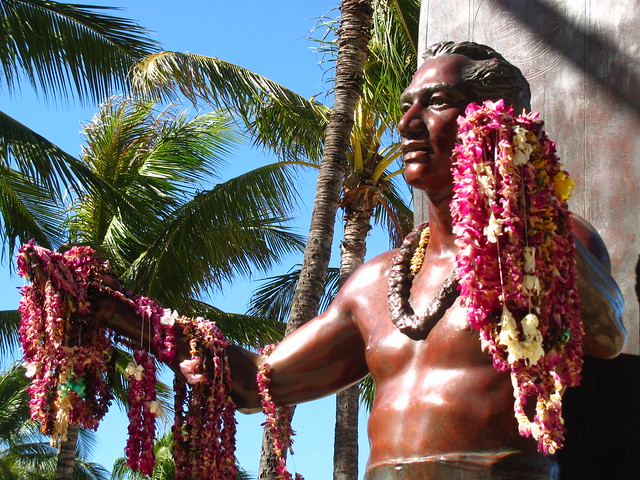
Duke Kahanamoku Statue at Waikiki

Words: Roderick Eime


How many surfers do you know with their own statue? Anyone who has strolled, ice cream in hand, along Waikiki’s famous boulevard cannot fail to miss the famous likeness of Duke Paoa Kahinu Makoe Hulikoholoi Kahanamoku. Or, just ‘Duke’, known to all as the father of modern surfing.
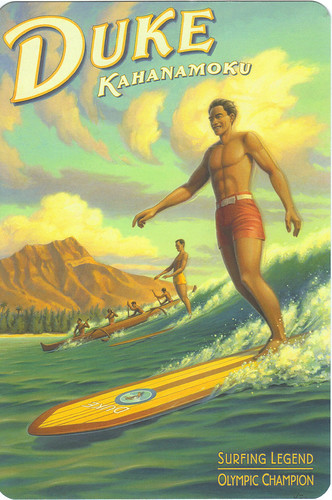
Duke KahanamokuThe ancient Hawaiians were observed by a curious Capt James Cook who noted in his famous journals that the natives of the Sandwich Islands enjoyed cavorting in the surf with planks of light wiliwili (Erythrina sandwicensis) wood. The longer ones were called alaia and the shorter ones, olo, and it was clear that status dictated who rode the longer ones because trees of sufficient size were rare.

This frivolous, unholy pastime was frowned upon by the missionaries, who arrived at the end of the 18th century. Despite their attempts to stamp out the activity (along with other ancient customs like hula dancing) a few Hawaiians continued to surf in secret and at the time of Duke’s birth in 1890, the sport was still just an indigenous curiosity. But it wasn’t surfing that was Duke’s springboard into the international limelight. It was swimming.

Duke was born into a large family with five brothers and three sisters. Against a backdrop of political turmoil, the family moved from his birthplace, Honolulu, to the seaside village of Waikiki in 1893 where he learned to swim and surf using a traditional olo. Duke was a typical keiki (beach baby) frolicking in the sand and playing in the sea.

“My father and uncle just threw me into the water from an outrigger canoe. I had to swim or else!” said Duke in the biography, Duke: A Great Hawaiian.

“We keikis taught each other.”

His schooling was cut short by a need to earn money for the large family.

“I spent my time trying to earn money – selling newspapers, shining shoes, carrying ice and doing just about anything to bring in some pocket money,” he told Lowell Thomas on one of the famous broadcaster’s radio programs.

With plenty of time in the water fishing and freediving for shellfish, it came to pass that Duke grew into a tall (185cm) strapping lad with an impeccable aquatic pedigree that could be traced back centuries.

“You know, there are so many waves coming in all the time,
you don’t need to worry about that. Take your time, wave come.
Let the other guys go, catch another one.”
Duke Kahanamoku on life and surfing


His prowess in the water was unmistakable and in his first swim meet at the age of 21, Duke smashed the world 100 yard freestyle record by an astonishing 4.6 secs using his own special stroke, the “Hawaiian Crawl”. When the times were sent to the Amateur Athletic Union (AAU), officials were in utter disbelief and refused to recognise the feat, claiming that a timing error, tides or currents must have assisted the unknown athlete in his open water sprint.

Despite this setback, there were plenty of Hawaiians who believed in this regal young gentleman and a public subscription raised enough money to send him and two others to the mainland USA National Swimming Championships in 1912. He began badly, without proper preliminary training, but quickly recovered to secure himself a place in the US Swimming Team at the Stockholm Olympic Games. Here all doubt was erased and Duke won gold in the 100m freestyle, receiving his victory wreath from King Gustaf V and the nickname "the Bronze Duke of Waikiki."

His swimming feats continued despite the cancellation of the 1916 Olympics due to WWI and at nearly 30 years of age, he won 100m gold again at Antwerp in 1920 as part of a US trifecta with another World Record time of 1:00.4

During the war, Duke was in demand as an exhibition swimmer and surfer and he made a historic visit to Australia just as our young men were heading off to Egypt in preparation for their wholesale slaughter at Gallipoli.

"Kahanamoku is a wonderfully dexterous performer on the surfboard, an instrument of pleasure that Australians have so far been unsuccessful in handling to any degree. Reports have been brought back from overseas of his acrobatic feats executed while dashing shorewards at great speeds, but one doubts the possibility of Duke, or anyone else, duplicating such feats in Australian surf. Still, if he should give one of his rare exhibitions for our edification, be sure it will create a keen desire on the part of our ambitious shooters to emulate his deeds, and it goes without saying that his movements will be watched intently. Personally, I am convinced that the natural amphibious attitude of the Australians will enable one or another to unravel the knack," wrote Australian Olympic swimmer and 1912 Olympic Silver medallist (behind Duke), Cecil Healy in anticipation. Tragically, Healy enlisted in the AIF the next year and was killed in France.

His demonstration at Sydney's Freshwater Beach was remarkable for several reasons. Firstly, it is considered the birthday of the Australian surf culture and secondly, because Duke arrived without a board.

"Having no board, he picked out some sugar pine from George Hudson's, and made one. This board - which is now in the proud possession of Claude West - was eight feet six inches long, and concave underneath. Veterans of the waves contend that Duke purposely made the surfboard concave instead of convex to give him greater stability in our rougher (as compared with Hawaiian) surf,” wrote reporter Patricia Gilmore, as part of a nostalgic retrospective in the SMH in 1948.

"Duke Kahanamoku was asked to select the beach where the exhibition would be given. He chose Freshwater (now Harbord). It was in February, 1915, that Australian board enthusiasts had their first opportunity of seeing a 'board expert' on the waves. There was a big sea running, and from 10:30 in the morning until 1 o'clock Duke never left the water. He showed the watchers all the tricks he knew, sliding right across the beach on the face of a wave. Demonstrating the ease with which he could manage with a passenger, he took Isabel Latham (still a resident at Harbord) out with him, and they would come right into the beach with incomparable grace and precision."

Duke clearly enjoyed his time Down Under and was impressed with our local surf conditions while his natural charm, glamorous appeal and gracious character obviously enthralled all of Sydney.

"I must have put on a show that more than trapped their fancy, for the crowds on shore applauded me long and loud," recalled Duke in his 1968 book, Duke Kahanamoku’s World of Surfing. "There had been no way of knowing that they would go for it in the manner in which they did. I soared and glided, drifted and sideslipped, with that blending of flying and sailing which only experienced surfers can know and fully appreciate. The Aussies became instant converts."

Duke eventually lost his world swimming crown in 1924 to handsome Johnny Weissmuller, later to become famous in films as Tarzan. Duke himself began appearing in films about this time playing, ironically, American Indians. He made 14 films in all, the last, Mr Roberts, in 1955.

In 1925, he hit the headlines again when, employed as a California lifeguard, he and two other surfers paddled out to save 12 fishermen from a boat that capsized in heavy seas near the Newport Beach harbour. The feat was hailed as “the most superhuman surfboard rescue act the world has ever seen."

Duke’s life was full of variety, glamour and, at times, plain honest hard work. Apart from lifeguard duties and occasional movie and TV work, he served as sheriff of Honolulu for almost 30 years until his retirement in 1961.

In 1968, Duke passed away from a heart attack and his burial at sea was attended by thousands of mourners while the motorcade was preceded by a 30-man police escort.

His legacy is enormous, not just in Hawaii, but around the world as the first international ambassador of surfing. So, as you gaze at the muscular bronze statue adorned with leis on the boardwalk at Waikiki, bow your head and repeat Duke’s mantra:

"Mahape a ale wala'ua,"(Don't talk, keep it in your heart)


Reading list:

Duke Kahanamoku’s World of Surfing by Duke Kahanamoku and Joseph Brennan 1968
Duke: A Great Hawaiian by Sandra K. Hall 2004
Legends of Surfing: The Greatest Surfriders from Duke Kahanamoku to Kelly Slater by Duke Boyd 2009
High Surf: The World's Most Inspiring Surfers by Tim Baker 2010


Struth! Is this the world's most photographed hotel?


IN his continuing search for the more weird and wondrous in the world of travel, David Ellis says that while the world's officially most-photographed hotel was built way back in 1893, it was actually a castle built several hundred years before that  which inspired its almost fairy-tale-like appearance.

American architect Bruce Price designed the hotel, Le Chateau Frontenac in Quebec City, for the Canadian Pacific Railway company at a time when rail travel was booming across Canada and America. But while it was like many other "chateau" style hotels he'd designed for the rail company, this one was absolutely enormous compared to the others, and having 618 rooms on a clifftop site it quickly came to dominate Quebec City's skyline – as it still does today.

Although it was built in 1893, there had been earlier castles and hotels on the site over several centuries, with the last hotel burning down in 1834.

Today with its cliff-top location and its fairy-tale appearance, Le Chateau Frontenac is listed by the Guinness Book of Records as the world's officially most-photographed hotel – with many guests saying it's a true-life castle of their dreams.

And yes, it does take its name from the real thing, Frontenac Castle in France that was built during the Renaissance.

                                                      ……………………

PHOTO CAPTION:

[] WITH its cliff-top location and fairy-tale appearance, Canada's Le Chateau Frontenac is the most-photographed hotel in the world. (LandLopers.com Matt Long)


Support Traveloscopy - Support Responsible Travel.

Traveloscopy is a freelance journalism enterprise supporting the tourism and travel industries. We aim to encourage people to travel thoughtfully and responsibly and also support sustainable initiatives within the travel sector. You can help us cover our operating costs, even if in just a small way.

Last 30 Days' Most Popular Posts