google.com, pub-5161388013621688, DIRECT, f08c47fec0942fa0 Traveloscopy Travelblog Traveloscopy Travelblog

December 20, 2016

Tiger spotting in India


RANTHAMBORE NATIONAL PARK

(Now open in August and September)


For many decades the hunting preserve of the Princes of Jaipur and offers a fascinating combination of crumbling monuments, living temples, wild beauty, and your best chance to spot a wild tiger. Set within a high, jagged escarpment, Ranthambhore Fort has towered over the park's forests for nearly a thousand years and has witnessed many a bloody combat -- even the Mughal emperor Akbar fought a battle for supremacy here in the 16th century. Inside the fort, lie a number of ruined palaces, step wells, and a celebrated Ganesha temple visited every year in September by two million pilgrims. But it is the forests, that lie shimmering in the gorges below, scattered with more ancient crumbling monuments that attract the foreign pilgrims, who come during the winter months to catch a glimpse of the mighty Bengal tiger. The Park generally remains closed from July to September however the Rajasthan Forest Department has just issued a decree to reopen Zone 6 to 10 in the months of August and September as well.

Ranthambore is accessible from Jaipur via a 4 hour drive and a 5.5 hour train ride from Delhi. There is a range of accommodation from the very luxurious Aman Resorts, The Oberoi Vanyavilas to the environmentally sensitive Khem Villas.

December 19, 2016

Mandurah and fresh Blue Swimmers – Delicious

It's that time of year when a vast water playground, just an hour's drive from Perth, becomes a frenzy of activity as fishermen – both professional and amateur – come to feast on blue swimmer crabs (sometimes called 'manna' or 'blueys'.

John Newton jumped aboard a crabbing and eco adventure vessel on its first crab hunt of the new season in the Peel-Harvey estuary and its waterways, which are recognised as twice the size of Sydney Harbour.

It was early on a Sunday morning – (well, for me, anyway) - as the 20 year-old Rebecca Sue – a customised pontoon crabbing boat – headed out of the city of Mandurah Harbour on a five-hour 'cruise' during which all on board were guaranteed a crab lunch.

Local professionals nabbed 80 tonnes of blue swimmer crabs last season (1 November to the end of August), with a similar amount caught by the public.

Crabbing master Kevin Mahney was soon pointing out the rules that in this iconic fishery the daily bag limit is 10 blue swimmer crabs per person and the daily boat limit is 20 – a Recreational Fishing from Boat Licence is required when fishing for crabs or getting to a fishing spot with the use of a powered boat.

The minimum size for blue swimmers is 127mm across the carapace (the widest part of the shell) and any undersize crabs must be thrown back in the water as soon as possible. This will give them the chance to grow big enough to breed at least once – helping to keep the fishery sustainable.

Breaking the rules can be a costly business, with the West Australian Department of Fisheries saying that while fines may be issued, if crabbers do the right thing there will be plenty of crabs for the future for everyone to enjoy.

It wasn't long out of the harbour before Kevin, who has a commercial skipper's licence, was baiting the drop nets with chicken wings and fish heads and giving them to people on board to throw them "like a frisbee" into the water which, in many parts, is just above knee-deep.

Rebecca Sue, with its maximum of 20 passengers, heads for Boundary Island – a renowned crabbing spot in shallow waters. And it's not long before the scoop net army is off the boat and scouring for blue swimmers.

Mandurah Cruises runs the crabbing and eco tours every day in season. The cost of $150 per person and $90 for children (aged 4-14), includes a crab and barbecue lunch on board. Wading shoes are provided – even sunscreen.

The award-winning company also operates dolphin and scenic canal cruises.

For more details, go to www.mandurahcruises.com.au or book online at: bookings@mandurahcruises.com.au


For information on the region, go to the Mandurah & Peel Tourism Organisation website:

www.mapto.com.au or www.visitpeel.com.au


Where to stay


A touch of B&B class from Bali has come to one of Western Australia's most popular tourist destinations.

It's Bali @ Avalon at Falcon, near the popular seaside resort of Mandurah, just over an hour's drive south of Perth.

A five-minute walk from stunning Avalon beach, the property was bought 18 months ago by Canadian Bob Pond and Queenslander Ray Weier, who have turned part of it into a B&B featuring two Balinese-style villas - Villa Dua (meaning two in Indonesian) and Villa Tiga (three).

The busy duo "inherited" a huge collection of indoor and outdoor Indonesian furniture, including Buddha and other stone statues, before starting the painstaking job of transforming the suburban house they bought into a Balinese hideaway.

All outdoor decking was restored and the swimming pool area and gardens were given a rejuvenated tropical look. Highlight of the garden area is a large wood and rattan cabana complete with day bed, mood music and subtle lighting. A small temple, like those found by the roadside in Bali, is also a feature.

The latest project is a Balinese-style outdoor kitchen with a built-in barbecue, hot plates, microwave and fridge, while hosting small events and weddings are also among future plans.

Open all year round, Bali@Avalon is located 11 kilometres south of Mandurah and the two villas each cost $225 a night, including continental breakfast, and $175 a night with continental breakfast during weekdays. Both villas have tea and coffee facilities, queen-size beds, dedicated indoor and outdoor tables and chairs, safe, fridge and microwave. Glassware, tableware and cutlery are provided, as well as bath and pool towels.

For bookings and more details, contact Bob at: james.pond@bigpond.com or Ray at: raymondweier@hotmail.com

Also, Bali @ Avalon can be seen at https://www.visitpeel.com.au/bali-avalon or https://www.airbnb.com.au/rooms/5965034

Written by John Newton.

Feature supplied by: www.wtfmedia.com.au

Images as supplied.


Images

1 Dancing Dolphins

2 Blue Swimmer

3 Lunch

4 Villa Courtyard

5 Villa Dua

6 Villa Tiga

December 12, 2016

Struth! World's longest rail tunnel now open.


Swiss open longest, deepest rail tunnel

THE world's longest and deepest railway tunnel has officially opened to link Switzerland's north with its south, running an amazing 57km through the Swiss Alps at a depth in places 2.3 kilometres below the tips of the highest mountains above it.

Construction of the Gotthard Base Tunnel (GBT), which is actually two parallel single-line tunnels, began in 1999 and took seventeen years to complete at a cost the equivalent of 16.5 billion Australian dollars.

And on December 11 it officially went into use with high speed passenger trains flashing through it at speeds of up to an incredible 250kmh on an almost-flat route from Erstfeld in the north to Bodio in the south.

And those trains take just 17 minutes to cover the whopping 57km length, with another tunnel to open in 2020 meaning for a reduction then of over an hour in current rail travel time between the major cities of Zurich, Lugano and Milan.

But the new GBT is not just a time-saver for rail passengers  – Swiss Federal Railways say the tunnel will be used by new freight trains as well, saving an incredible 1-million lorry journeys a year on roads through the Swiss Alps, thus reducing environmental damage enormously.

FOOTNOTE: When the Swiss Federal Railways decided to offer 1,000 free tickets on the first official train through the Tunnel last Sunday, they held a lottery to pick the lucky 1,000 travellers – and over 160,000 locals rushed to buy tickets in the lottery in the hope of getting one of those 1,000 seats.

(David Ellis)

                                                    …………………………….

PHOTO CAPTION:

[] TRAINS like this will flash at speeds of up to 250kmh some 2.3km deep in the Swiss Alps with the opening on December 11 of the world's longest and deepest rail tunnel.
    (Swiss Chamber Commerce & Industry)

November 29, 2016

Exploring the colonial heritage buildings of old Rangoon

When the British finally left Burma in 1948, they left behind 124 years of colonial heritage in the form of buildings, landmarks and history.

Many of the fine architectural examples were damaged by bombing in WWII and fell into further disrepair after neglect by the military regime who took control of the country in 1962.

Today these buildings, many more than 100 years old, exist in a mixed state of repair. Some appear to be derelict but are still inhabited by a motley assortment of tenants comprising families and small business operators.

Others are nominally occupied by government agencies or restored for use by more ambitious enterprises such as the immaculate The Strand Hotel.

In the meantime, NGOs like the non-profit, Yangon Heritage Trust aim to "protect and promote Yangon's urban heritage through the development of a cohesive urban plan for the city."

Unknown building off the Strand.

Some buildings seem to be derelict but still sustain life

Eerie cobwebs in an empty elevator shaft

The former Irrawaddy Flotilla Company Building

The former police commissioner's building now being restored as a 229-room luxury hotel

November 14, 2016

Aussie Pubs that are movie stars

Silverton Hotel has featured in many movies.
Photos from the Mad Max shoot near Silverton.
The Daly Waters Hotel is famous for its bra collection.
The legendary Daly Waters Hotel
The ancient tourist truck driven by Crocodile Dundee.


Words and Images by Dallas Sherringham

Virtually every movie made in Outback Australia has had a pub as part of the plot.

The bush abounds with pubs that have enjoyed movie stardom and some continue to be used in movies.

Everything from Priscilla, Queen of the Desert to Welcome to Whoop Whoop and Red Dog have had pubs as a central theme for the action.

I recently visited three of the most famous and enjoyed cleansing ale or two along the way.

The first, and most famous of all, was the Silverton Hotel west of Broken Hill. This hotel first became famous because Mad Max was made there.

It can now boast having hosted 200 plus movie crews down through the years. The walls of the pub are covered in snapshots of the stars and the casts and crew at work and relaxing.

There is a Mad Max museum in Silverton and the town now features several renowned artists. The latest movie Mad Max: Fury Road was due to be filmed at Silverton, but unseasonal rains made the landscape too green for the production and it was made in Namibia.

The Walkabout Creek Hotel in McKinlay.

Back in the 1980s, the Crocodile Dundee movie producers chose a hotel at the remote west Queensland town of McKinlay and turned it into the Walkabout Creek Hotel.

All the locals from around the district excitedly turned up to watch Paul Hogan perform in his first major movie role. They soon grew disillusioned with the movie making process as endless short takes were filmed over and over.

The hotel inevitably became a tourist attraction and it was decided to move it lock stock and barrel to the Landsborough Hwy that passes along the eastern side of town.

Today, a continual flow of travelers stops in to have a look at the legendary hotel. Parked out the front is the ancient old truck driven by Crocodile Dundee in the movie. It was donated to the hotel by John "Strop" Cornell who produced the film.

Parked to one side is the Valiant ute driven by John Mellion who played "Wally" in the movie.

An interesting fact is that only the exterior of the hotel was used in making the movie. For the interior shots, a hotel bar was built in a movie studio.

The Northern Territory has many fascinating pubs, but none is better known than the one at Daly Waters.

Daly Waters Hotel sits just off the Stuart Hwy in the centre of the Northern Territory. It has been featured in a number of movies and TV shows and the most recent was Last Cab to Darwin starring Michael Caton..

Both the exterior and interior of the hotel are amazing. The first thing that strikes you is the vast collection of ladies bras hanging from the ceiling. There is also an equally vast collection of guys' undies hanging from the rafters.

It apparently all started with bet years ago and kind of grew…and grew. Now the ceiling and walls are covered with every imaginable kind of clothing, photos, messages and hats.

The exterior of the hotel looks like it is about to fall down and is propped up by a massive bougainvillea. People come from all around the world to see the hotel. In the beer garden I heard American, Asian and Irish accents.

The pub came about because of the nearby airfield which was used by Qantas and other airlines as a refueling stop on flights to London in the 1930s. The Qantas hangar and the well preserved airstrip are still there.

During WWII, it became an air force base, principally used to refuel bombers on their way north.

November 07, 2016

World's shortest ferry ride


No need for a seat on this ferry

IN his continuing search for the more weird and wondrous in this world, David Ellis says that when it comes to ferry rides, the Canadian city of Toronto takes the cake for having the world's shortest.

Because the distance from Downtown to the city's Toronto Island with its City Centre Airport, is all of 121 metres (that's less than 400 feet) and takes the ferry a mere 90 seconds to complete.

Until July of 2015 when an underground pedestrian tunnel was opened, the ferry was the only means of public transport to the Airport in Lake Ontario, and which sees 2.5 million passenger movements a year on flights to and from 22 centres in Canada and the USA.

Free for passengers and with a small charge for a limited number of cars, the ferry operates every 15 minutes, nineteen hours a day. But with often long queues of waiting passengers during peak periods, it was decided to supplement it last year with the pedestrian tunnel 30 metres underground, and with two moving footways in each direction.

Including descent and ascent by lifts or escalators, and travel on the 240m long footways, that whole tunnel journey takes around six minutes… and overhead the ferry continues to operate unaffected on its unique 121 metre, 90 second journeys.


[] YOU won't get a shorter ferry ride than this – a mere 90 seconds to cover all of 121 metres. (PortsToronto)

November 06, 2016

See the historic wonders of Há»™i An, Vietnam


by Roderick Eime

In all of Vietnam, the historic city of Há»™i An is one of the favourite places for Australians.

It might be the exquisite old town centre of this fabled city with its traditional Chinese style shophouses, the great artisan craft shopping or the overwhelming choice of dining options from traditional Vietnamese street food to magnificent fine dining.

Historically, the region began as an international commerce centre as early as the 7th Century when the Cham culture dominated this part of Vietnam. Spices, in particular, were an important trade item.

Over the years, Há»™i An lost its prominence as a trading port and commerce hub to nearby Danang. Historians believe this might have been because the river became silted up, making entrance of vessels difficult. The result being that Há»™i An was allowed to retain its historic charm and architecture, leading to its inscription on the UNESCO World Heritage list in 1999 and is described by the convention as “an exceptionally well-preserved example of a South-East Asian trading port dating from the 15th to the 19th century. Its buildings and its street plan reflect the influences, both indigenous and foreign, that have combined to produce this unique heritage site.”

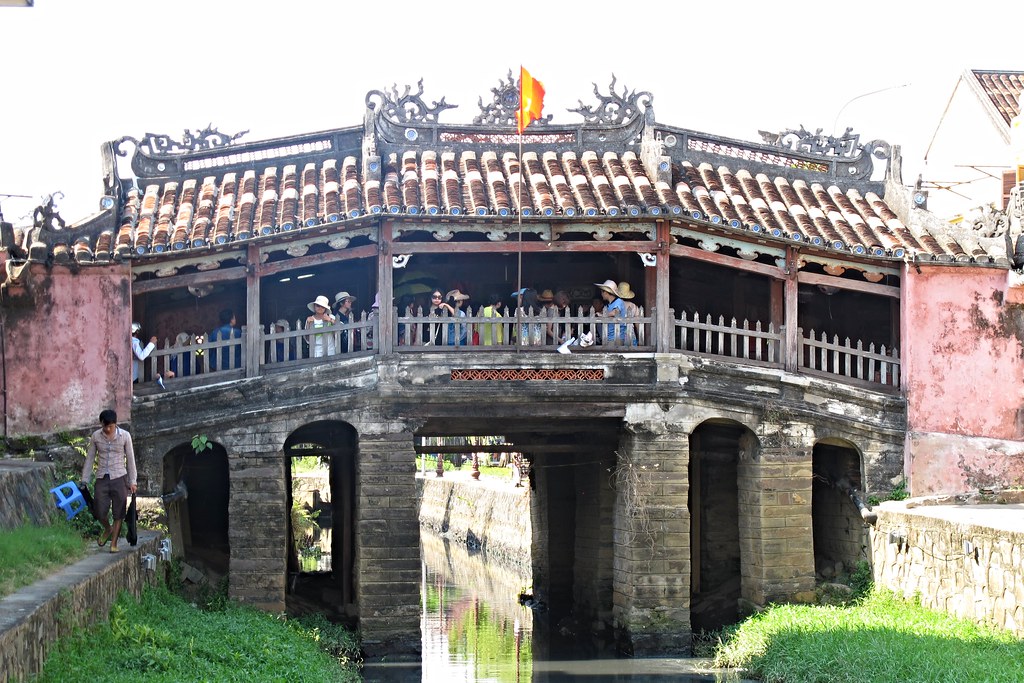
Há»™i An’s famous centrepiece is certainly the centuries-old Japanese Bridge, so-called because it lead to the Japanese settlement that once existed in the once divided town, known as Hai Pho in the 16th Century.

Today the bridge is the hub of tourist activity with stalls, shops and street vendors stretching out from both sides. Vehicles are no longer permitted across the bridge, so all traffic jams are of the pedestrian sort.

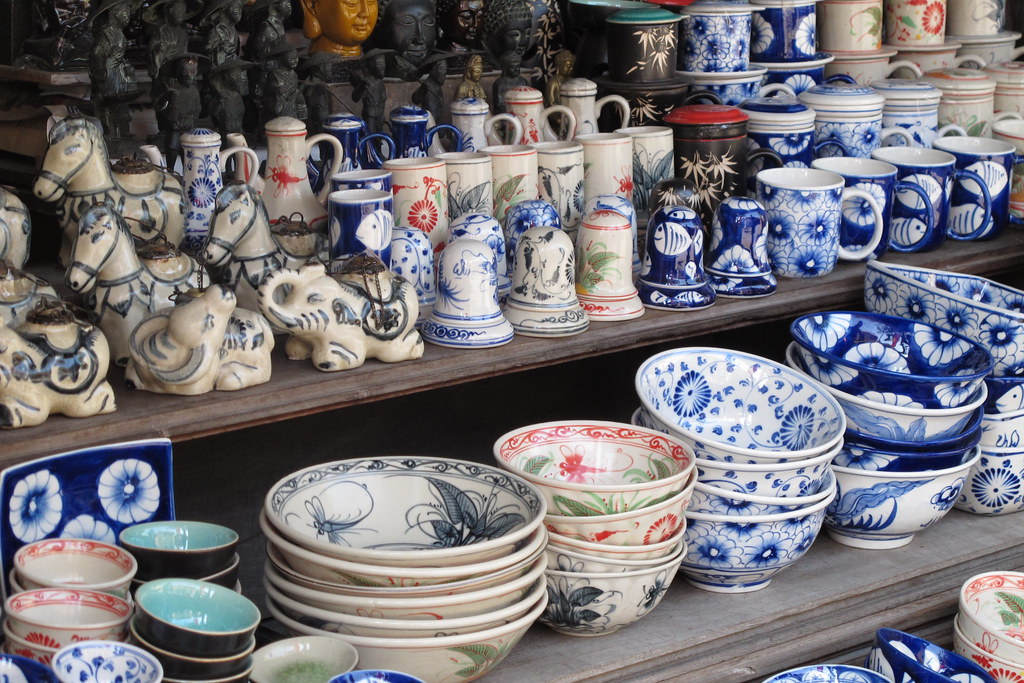
For astute shoppers, Há»™i An is best known for quality, hand-crafted leather goods. Clothing, luggage and shoes are the most sought after. Textiles and ceramics also rate highly with discerning buyers.

Ceramics on sale in Hoi An

The Vietnamese take their food and cooking seriously and you can get an authentic insight into the native cuisine with a half or full day class at the Red Bridge Cooking School, run by Aussie ex-pat, Nick Hatton. It’s located just out of town in a delightfully secluded location that can also be reached by river boat.

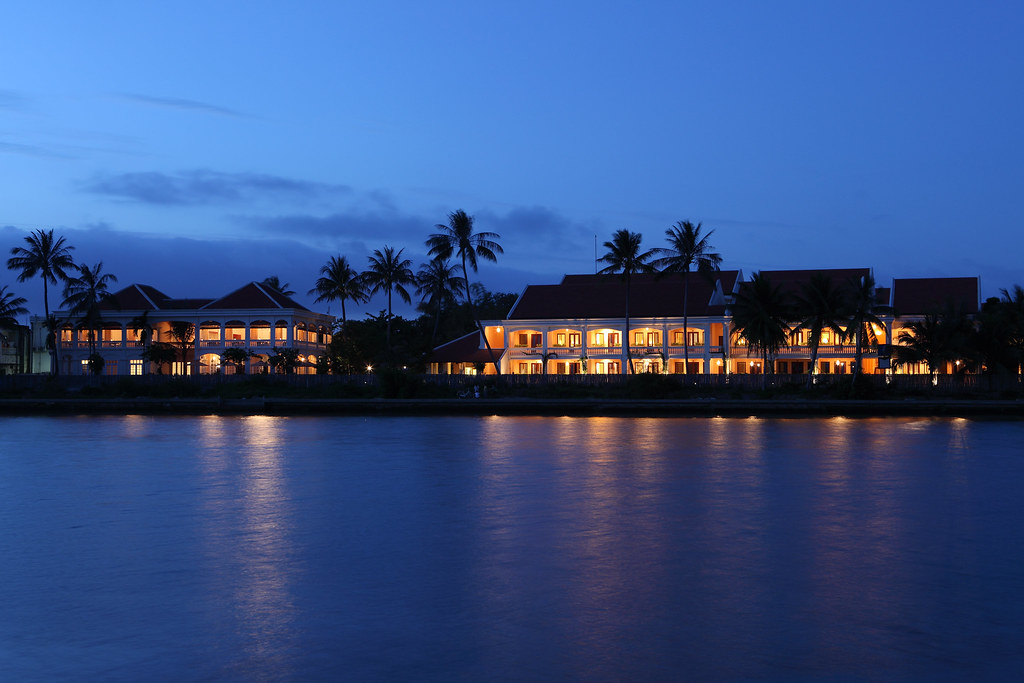
While visiting the UNESCO World Heritage old town and all its wonders, staying in Há»™i An presents many options but you’ll be hard pressed to find a more relaxing and culturally appropriate location than the Anantara Hoi An Resort. Ideally positioned on the banks of the Thu Bon River, it's just a short distance to main attractions.

A discreetly low-rise and tasteful resort, the architectural style incorporates the French, Dutch, Chinese and Japanese influences that define the multi-faceted history of Há»™i An. The 93 suites are roomy with a split level internal design that also allows for an external daybed, perfect for a balmy afternoon snooze. Choose from either garden or river view.

Riverside Anantara Hoi An Resort 

Australian GM, Noel Cameron, exemplifies the congenial hands-on approach that is evident throughout the resort from the exquisite dining options (there are five to choose from) right through to The Spa, where you can luxuriate with a mud wrap, salt scrub or four-hand massage. Noel, however, leaves these specialised tactile treatments to his expert therapists.

Excursions and river cruises can be organised directly for your convenience or do as so many guests do and take a complimentary pushbike for an energetic peddle around the flat streets of the neighbourhood. If the sky looks dark and gloomy, there are Vietnamese cooking lessons with Anantara’s signature Spice Spoons concept, as well as language, painting and lantern making classes.

Even if you are staying elsewhere, why not stop by for a memorable meal at Lanterns Restaurant, a refreshing drink at O’Malley’s Irish Pub (yes, true) or the more authentic heritage-themed garden bar, a perfect complement to the special atmosphere of this ancient city.

See:
  • The Museum of History and Culture 
  • The Hoi An Folklore Museum 
  • The Museum of Trade Ceramics 
  • The Museum of Sa Huỳnh Culture 
Lantern Festival:

On full moon (the 14th day of every lunar month) the streets come alive with colourful lanterns, candles and traditional music.

When to Visit:

While the city’s location on the Thu Bon River enhances much of its appeal, weather can be a challenge and the waterfront is known to flood during prolonged heavy rain. Visitors are best advised to time their travel to the drier months between February and April, when rainfall is low and temperatures are comfortable.

Stay: http://hoi-an.anantara.com/ (TripAdvisor 4.5)

More: http://www.visithoian.com/


The writer stayed at Anantara Hoi An Resort as a guest of the Minor Hotel Group

GETTING THERE

Fly to Vietnam with Vietjet

The new-age carrier Vietjet has not only revolutionized the aviation industry in Vietnam but also been a pioneering airline across the region and around the world. With a focus on cost management ability, effective operations, and performance, applying the latest technology to all activities and leading the trend, Vietjet offers flying opportunities with cost-saving and flexible fares as well as diversified services to meet customers’ demands.

Vietjet is a fully-fledged member of International Air Transport Association (IATA) with the IATA Operational Safety Audit (IOSA) certificate. As Vietnam’s largest private carrier, the airline has been awarded the highest ranking for safety with 7 stars by the world’s only safety and product rating website airlineratings.com and listed as one of the world's 50 best airlines for healthy financing and operations by Airfinance Journal in many consecutive years. The airline has also been named as Best Low-Cost Carrier by renowned organizations such as Skytrax, CAPA, Airline Ratings, and many others.


October 31, 2016

Bank of England haunted by ghostly nun


STRUTH!

Sarah's haunting love for her brother

IN his continuing search for the more weird and wondrous in this world, David Ellis says that bizarrely, people in London still claim today they've been asked by Sarah Whitehead the same repeated question: "Have you seen my brother?"

Bizarrely, because Sarah's brother was hanged in London in 1812 for forgery at The Bank of England where he worked, and Sarah herself died 25 years later.

But to this day, people swear they've been stopped near the bank on Threadneedle Street by a little old lady dressed in widow's weeds of long black gown and black veil from another era, and asked that question.

Knowing how close Sarah was to her brother Paul (often misidentified in the media as Philip,) family members withheld from her that he had been hanged, and she began going regularly to the bank to ask his whereabouts when he didn't return to the home that they shared.

No one would say, until a clerk finally blurted out the truth, and at that moment Sarah's mind snapped. She donned widow's weeds and every day for six years returned asking to see Paul, ultimately also demanding money she said the bank now owed her.

In 1818 the bank agreed to pay her a significant amount on condition she not visit them again, and Sarah agreed. But after her death, her ghost – dubbed The Black Nun – began appearing regularly in the bank and along Threadneedle Street, with scores of sightings of her continuing to this day, 179 years after her death.

And each time she politely asks those she encounters the same question: "Have you seen my brother?" and when told "No," simply vanishes…


PHOTO CAPTION:

[] A SKETCHED likeness of Sarah Whitehead, London's ghostly Black Nun, and The Bank of England she reputedly haunts to this day. (Wikimedia)

Support Traveloscopy - Support Responsible Travel.

Traveloscopy is a freelance journalism enterprise supporting the tourism and travel industries. We aim to encourage people to travel thoughtfully and responsibly and also support sustainable initiatives within the travel sector. You can help us cover our operating costs, even if in just a small way.

Last 30 Days' Most Popular Posts