google.com, pub-5161388013621688, DIRECT, f08c47fec0942fa0 Traveloscopy Travelblog Traveloscopy Travelblog

August 22, 2018

Help our farmers. Forget Bali, go bush


#visitnsw

FORGET BALI, GO BUSH!

Dallas Sherringham and the team at Weekly Travel Feature want to support our people On The Land.

Australia's farming communities are reeling from one of the most devastating droughts in our history and now sever bushfires, but you can help out just by swapping your normal overseas holiday for a Bush Adventure. From the coast to the outback, you will be surprised by the choice – from camping to luxury and all in between.

Even a simple weekend away in the country will make a huge difference to the hundreds of thousands of struggling families in the wide, brown land.

Our nation is full of fascinating towns, regions and friendly people. There are hidden gems to be had out there - all you have to do is find them.

As a travel writer I get to see some amazing places worldwide, but for me, there is nothing better than heading out on a road heading west with not a care in the world. Australia frees the soul of the weary traveller.

NSW Deputy Premier John Barilaro hit the nail on the head when he said city dwellers spending a weekend in a regional area was one of the simplest and most meaningful ways people in the city could support regional towns and cities.

 "Even though we are in drought, our cafes are still brewing coffee, our shops are still open and we are still in business.

"Some of the most beautiful iconic experiences are there ready for you to enjoy today.

"Support our businesses by getting out and spending some money in our regions.

"When you spend that money in a café, that money goes around that community. It means employment remains, jobs remain.

"Our servos would love you driving by. Our cafes would love you to have brekkie with some locals. Our accommodation houses, our hotels would love to have you stay and I tell you this, you'll get that country hospitality each and every time," he said.

 "So, if you get the chance, please, get out for the drought and spend some time and some money in our regional areas."

Now, if you have decided to take John's advice and head bush, I have a few simple tips for you:

 Plan ahead. All regions and main cities and towns have visitors' centres online. They also have clued up people on the phone or answering emails, so don't be afraid to ask.

You might see a place you really want to visit such as a winery, a museum, a historic building or a homestead. It is best to contact them before you leave so that you know the visiting hours and which days it is open.

The worst thing you can do is turn up in a town at 4pm, check in to your accommodation, have a drive around and leave the next morning.

As I said at the start, every town has hidden gems and it takes more than a day to see it all.

Accommodation houses always have a plethora of pamphlets (try saying that in a hurry) featuring local attractions, clubs and restaurants, but once again ask your host about them and, if he recommends it, phone ahead.

Take some picnic and barbecue gear and a fold up table and chairs on your trip. And always take a billy! Oh, and some Aeroguard and plenty of water.

You can find amazing views, quiet river spots, and hidden places far from the madding crowd. Often there will be a barbie or two in such places, so you can brew up a coffee or throw on a steak and sit back and breathe in the fresh air.

As Darryl Kerrigan (Michael Caton) famously said in The Castle: "Ah, the Serenity!"

Here are some links for your own choice, or just go to Google and put in your own search!

https://www.visitnsw.com/accommodation/accommodation-farm-stays

https://www.farmstayplanet.com/farm-stay-rural-travel-guides/australia/

https://farmstaycampingaustralia.com.au/

Words: Dallas Sherringham
Images: Michael Osborne
Feature supplied by: www.wtfmedia.com.au

Images

1.      Numbugga, Bega Valley NSW
2.      Candelo, Bega Valley NSW
3.      South Coast NSW
4.      Hill End NSW
5.      Royal Hotel Hill End NSW
6.      Hill End NSW

August 20, 2018

Tea for two at world's smallest restaurant:

THE CHARMING dining room of this "world's smallest restaurant" has just one table for two guests.

NO QUEUEING FOR THIS RESTAURANT
David Ellis
THERE's a restaurant in Italy that's got just one table, and for that one table just two chairs, so that it quite genuinely boasts of being "the world's smallest restaurant."

ON sunny Italian days you can choose to have
your table set up outdoors overlooking
olive groves, vineyards and distant mountains.
And if you decide on it for lunch and it's a balmy Italian day you can have that table taken outside to indulge the air and look over surrounding olive groves, vineyards and distant mountains.

While for dinner indoors in the evening, you will be welcomed by a driveway of flickering candles illuminating the ruins of an ancient villa in grounds once the home of Roman lyric poet Horace, back in the time of Emperor Augustus (27BC-14AD.)
Named Solo Per Due – meaning "Just For Two" – you'll find this restaurant at a tiny place called Vacone (pop 250) an hour north of Rome. And when you book you will be asked your preferences in food so that a lip-smacking menu can be created just for you, and they'll even ask your preferences in background music as well.

Plus you will be welcomed on arrival by one of the co-owners, while for privacy your waiter will retreat to the shadows, responding to your summoning with a little silver bell.

The price for lunch or dinner at this "world's smallest restaurant" is E250 per person, including select wines and aperitifs. That's around AU$390 which is not exactly the cheapest, but, hey, this is a "world's only" and you'll have it totally to yourselves for some very, very special occasion that few others can say they've done.

And take cash – they don't accept credit cards. Check it out further on www.soloperdue.it


August 06, 2018

Snap up Carlo Ponti's Roman villa for just $30 million


NO PLACE LIKE THIS FOR A ROME HOME

David Ellis

A two-storey Roman villa over a third of an acre in size and once owned by film producer Carlo Ponti just minutes from the Colosseum, has been reduced "on special" to 19 million Euros (AU$30m) after failing to sell at twice that price since going on the market in 2015.

The huge villa sits on 1.5ha of private parkland where Ponti lived with his first wife and family before marrying actress Sophia Loren in 1966, and living elsewhere with her while retaining ownership of the villa until his death in 2007.

The villa and its vast park-like gardens are located in the Appian Park Way that is one of Rome's most prestigious areas. It has a heated swimming pool, and a smaller "guest's villa" that's subject to separate sale.

The main villa was built in 1880 over an ancient quarry that was used from 312BC for the extraction of rock to make the famed Appian Way, and still has the remains of an ancient vault made of concrete-like materials, and a room with a 138-year old mosaic floor.

The entire place was extensively rejuvenated both in the 1950s and 1980s.

FOOTNOTE: CARLO PONTI met Sophia Loren when she entered a beauty contest of which he was a judge and she was just 14 years of age. He was 22 years her senior and swept away by her beauty and humour, and they married seven years later, although that marriage was annulled in 1962 under Italian law that did not recognise his quickie-divorce in Mexico from his first wife. They later married again in France and remained so until Ponti's death in 2007.

Some years later Sophia Loren was asked by a journalist if she was ever likely to marry again, to which she replied: "Never again. It would be impossible to love anyone else."

And now aged 84 she's remained true to her word.

                                                     …………………………..


PHOTO CAPTIONS:

[] FORMER home of Italian film producer, Carlo Ponti sits on 1.5ha of private landscaped parklands, and surrounded by further public parks along Rome's famed Appian Way.

[] ONE of the many oddities of the home that was built in 1880 – a cosy dining area within what was once a family tomb with an ancient mosaic tiled floor.

August 05, 2018

New Zealand: Follies, fiords and The Remarkables


Helen Flanagan explores New Zealand's South Island.

It's hard to imagine somewhere more blessed with beauty and style yet thrilling and quirky.

Christchurch, known for its English heritage may have been shaken by a series of tectonic occurrences, but the resilience of the people has not been stirred. The heart of the greater Canterbury region, albeit bruised and battered, welcome visitors who now experience an extraordinary entrepreneurial spirit, by combining urban regeneration and innovation with heritage, culture, exhilarating activity and large doses of fun.

Flat-bottomed punts glide on the Avon River, which meanders through the city. On its banks are cycling paths, Hagley Park and the Botanic Gardens. Sadly many historic stone buildings were destroyed in the earthquakes.

Kilmore Street's Pomeroy's Old Brewery Inn, a traditional English-style pub, continues to dispense a munificent range of hand-picked beers, groaning plates and wonderful hospitality.

Venture out of town along narrow roads hugging the curvaceous cliffs to Governors Bay, and give in to temptation at She Chocolat, a chocolaterie and restaurant, before passing cheeseries, dodging cyclists and joggers, up hills and down dales to harbourside Akaroa.

Nestled in the centre of an ancient volcano, this former home to early whalers and sealers, has morphed into myriad galleries, knick-knack shops, sidewalk cafes featuring 'fush 'n' chups' and just a stagger up the hill is the Giant's House, built in 1880. The former bank manager's house, a folly-bizarre work-in-progress by artist Josie Martin for more than 20 years, began with digging up shards of old china, mirror, glass and mosaic-ing the front step area. It turned into an obsession of flamboyance, whimsical and totally eccentric, often monolithic theatrical displays.

Along every kilometre there's something to take your breath away. Ooh and aah at dinky villages, lush fields carpeted with flowers, gamboling lambs and frisky deer. Queue for a Jimmy's pie at Roxburgh and stop for refreshments at Alexander, before arriving at the tourist town of Queenstown, a magnet for ardent adventure seekers even out of ski season, as well as gallivanting food heads and wine aficionados.

Arrive at Rees Lakeside Residences and be prepared for a beautiful surprise. Superbly positioned, just steps away from the shores of the dazzling blue Lake Wakatipu, with the snow-capped aptly named Remarkables as a backdrop, are over-generous 3-bedroom villas. They are adjacent to but separate from The Rees Hotel main building.

Stroll around Queenstown's waterfront where the vintage steamship TSS Earnshaw docks, call into Patagonia Chocolates and dine at Fishbone where chef/owner Darren Lovell boasts fish fresh off the local boats, local vegetables some from Fishbone's kitchen garden and cooking so every ingredient sings in perfect harmony.

Walk around the historic gold town of Arrowtown and discover Glenorchy, a small settlement nestled at the northern end of Lake Wakatipu, where the moss-covered forests received worldwide attention as one of the settings for Peter Jackson's Lord of the Rings.

For an unforgettable experience including the journey, Milford Sound and the 1.25 million hectare Fiordland National Park and Te Wahipounamu World Heritage area, book an overnight cruise. From still dark waters loom sheer rocky cliffs, forests clinging to the slopes, raging waterfalls everywhere, fur seals basking on rocks, rare crested penguins, tiny blue penguins and bottlenose dolphins.

Excitement of a different kind can be found at Kawarau Bridge, the birthplace of bungy jumping where adrenaline-junkies trust their lives to lengths of rope and elastic, diving 43m below. Not your thrill? How about the exhilarating Shotover jet boat ride travelling at 85k precariously close to walls of the narrow Skippers Canyon, twisting, spinning out and around at a full 360 degrees and often in just 10cm of water.

For a change of pace, head to Mackenzie Country and the hydro-town of Lake Tekapo via the world's highest salmon farm at Mt Cook, for a self-guided tour and a plate of sashimi fresh from the pen. Be in awe of the turquoise blue of the lake which is called 'rock flour' and created when the glaciers in the headwaters of Tekapo grind rock into fine dust on its way to the lake.

Don't miss the wonders of the southern night sky at the Mt John Earth & Sky Observatory. The uniquely dark sky of the Mackenzie Basin with its dramatic glacial and alpine surroundings is devoid of light pollution so the Milky Way Galaxy, Southern Cross, Alpha-Centauri, Majellanic Clouds Jewel Box, Sirius and more can be seen through powerful telescopes, binoculars and even the naked eye.

A visit to New Zealand's South Island is a true star-studded experience at every turn.

If you go:

The 2018 season for Air New Zealand's direct flights between Auckland and Sunshine Coast commences on Friday 6 July, with the last service on Sunday 28th October.

There are four 4 flights per week on average; flight time is 3hrs 30mins.

For all Air New Zealand flight visit: www.airnewzealand.com.au  

The Rees Hotel visit: www.therees.co.nz  

Feature supplied by: www.wtfmedia.com.au

Words by Helen Flanagan                                                  

Captions: Images as supplied

1 Autumn in Arrowtown
2 Rees Lakeside Residences
3 The Giants House Akaroa
4 Shotover Queenstown
5 Rippon Vineyard, Lake Wanaka
6 Milford Sound Fiordland


Ravenswood: The little town that won't quit

Imperial Hotel

Len Rutledge is delighted to find the city changes quickly to country as they travel southwest from Townsville, north Queensland on the Flinders Highway. Anthills replace houses and cattle are more common than people.

We climb the range and turn into tiny Mingela. Once known as Cunningham, then Ravenswood Junction, it became Mingela in 1930 from the aboriginal name of Ming-illa meaning big waterhole.

There are still waterholes around and birdlife is prevalent during the wet season but most interest today settles on the quintessential outback Mingela Hotel. We call in to see the historic photos and chat with some locals. It is all very laid-back.

Old mining equipment
It is 40 kilometres southeast from here along an excellent bitumen road to Ravenswood. Gold was discovered here in 1868 and soon the thriving town had schools, hospitals, police station, courthouse, School of Arts and 48 hotels.

The railway arrived in 1884 but by then the town was already in decline. There was a big revival around 1900 but when the line closed in 1930 most thought Ravenswood's demise was imminent. The town was saved with the arrival of Carpentaria Gold.

The best town information is obtained from the great Courthouse Museum. The museum, in a lovingly restored building from the 1870s, contains many artefacts and stories of the people who made Ravenswood.

We plan to stay the night so check into the Imperial Hotel. The striking two-storey brick hotel survives from 1901. The interior has been renovated but not remodelled and we find attractive period accommodation.

We take our lunch in the bar at the front right of the building. Structurally, it's a circular bar with a large ornate divider. In the early days, the bar was split into workers and employers sections but this is long gone. The batwing doors, the incredible high ceiling and the old stained glass make this a special place.

Post Office and Store
The Burdekin Dam is about 80 kilometres from Ravenswood. The excellent road winds its way deeper into the Leichhardt Range. We reach the dam and find picnic areas, wood BBQs, tables, shelters, toilets and cold showers. To fish in the dam you need a permit and these are obtained from the Queensland Government Gateway or from local tackle and fishing shops.

The caravan park has good facilities and gets very busy in holiday periods, as the dam is also a popular spot for canoeing, sailing and waterskiing.

Ravenswood has its own caravan park, tennis court, barbeque and picnic area, swimming pool, church and golf course. It's fun to wander around the area and we were fascinated by the historical display and the local pottery and crafts in the historic Thorp's Building.

Before leaving we visit the White Blow Environmental Park where there is a spectacular outcrop of white quartz and a viewpoint over the operating mine. It is a fitting end to quite a fascinating visit.

www.LenRutledge.com

Words: Len Rutledge Photos: Phensri Rutledge

WHEN YOU GO.

Imperial Hotel, Macrossan St., Ravenswood. Tel: 07-47702131. The hotel has air-conditioned country-style rooms, a friendly atmosphere and a kitchen open all day.

Courthouse Museum Ravenswood. Tel: 07-47702047. Open 11am – 1pm daily.

Feature supplied by: www.wtfmedia.com.au

August 04, 2018

Wilpena Pound: A triumph under tarpaulin

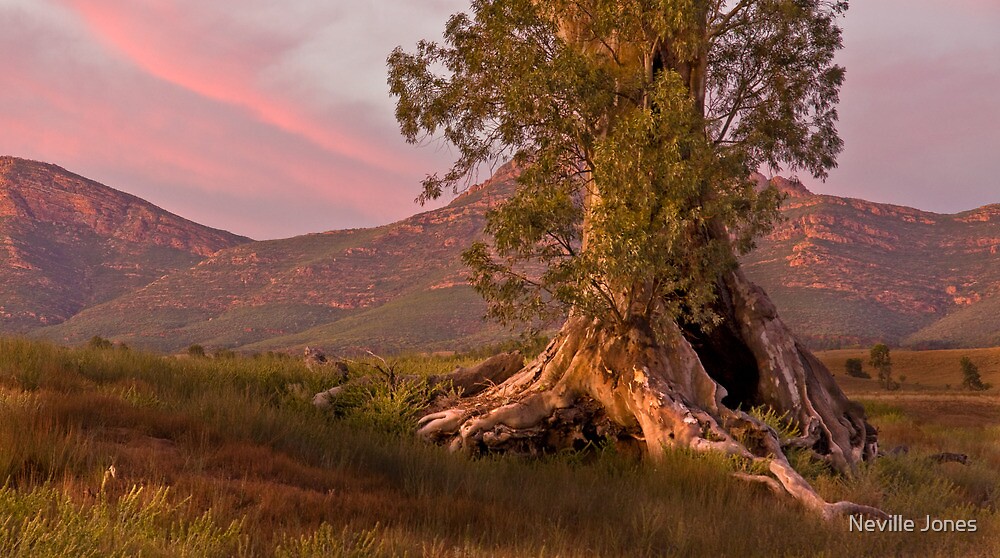
Cazneaux Tree at Dawn (Neville Jones)

“The roads were awful and the old bus slow and bumpy!”

Okay, it was 1953 and the 'old bus' was likely a converted war surplus workhorse, but that was mother's experience on her honeymoon on a Bond's Tours excursion to the Flinders Ranges 65 years ago. The original 'chalet' wasn't much chop either apparently.

July 30, 2018

Whistler's dizzying Cloudraker Skybridge for 'thrill seekers or the insane'


BRIDGE IS SOMETHING TO WHISTLE ABOUT

David Ellis

IF you're not quite into heights, we'd suggest you give a big miss to a new suspension bridge that's just opened at Whistler in Canada's British Columbia.

Because while it makes for nice viewing of the alpine snow below your feet when you're at the top of its mountain, the actual valley floor and a lake within it that you'll find yourself also looking down on, are in fact over two-thousand metres – that's  some two-kilometres-plus – down at the bottom of your mountain.

That's a lot of vertical metres, and a long way to tumble should you somehow fall off your suspension bridge

Wrapped up somewhat colourfully by one Canadian tour company as "an attraction for thrill seekers or the insane," and officially named the Cloudraker Skybridge, this amazing 130-metre long structure is the latest in things to do at Whistler Blackcomb, one of the largest ski resorts in the world.

And it will also link Whistler's Peak with its West Ridge, where a new viewing platform will soon overlook the vast and spectacular Whistler Bowl all that way down.

Just give this bridge a wide berth if you are a bit wary of heights… although if you are still kind of interested, while still a little nervy too, hop onto www.whistlerblackcomb.com to have a look at just what you could be missing.


[] IF you don't like heights, this may not be quite your idea of a day's family outing. Because that lake and the little township next to it in this picture, are two vertical kilometres down from this new 130m suspension bridge from which this pic was taken in the mountains at Whistler, in Canada's British Columbia.

July 29, 2018

Laid back Luxembourg


by John Newton

Charming and romantic, you'll find it hard to come across a more laid back capital city with the same name as the country.

While it doesn't have the same wealth of attractions like its giant neighbours – France and Germany – Luxembourg, where French is the dominant language, has a rich cultural heritage and is pulling out all the stops to lure long-haul travellers, such as visitors from Asia, Australia and the United States, to the only Grand Duchy in the world.

First-time visitors head straight for the Grand Duke's official residence – the grand-ducal palace – to see the changing of the guards, which happens every two hours in fine weather and every 40 minutes to one hour in snow or wintry weather. A late 16th century Spanish Renaissance-style building, the grand-ducal palace - with its conical shaped turrets that look like witches hats - served as a concert hall and tavern under the Nazi occupation of Luxembourg. It was not until 14 April 1945 that the people of Luxembourg could once again cheer Grand Duchess Charlotte on the palace balcony. The Grand Duke's city residence is open to the public during the summer only, with guided tours from mid-July to September, except on Wednesdays.

A few hundred metres away in the heart of the city is Luxembourg's 'Golden Lady'. Called the Gelle Fra monument, it commemorates the thousands of Luxembourgers that volunteered for service in the armed forces during World War 11. Gelle Fra is the nickname given to the Monument of Remembrance, which is situated in Constitution Square – in the Ville Haute quarter of Luxembourg City. The centrepiece of the monument is a 21-metre tall granite obelisk on top of which stands a gilded bronze statue of a lady – representing Nike, goddess of victory or 'Queen of Freedom' holding out a laurel wreath as if placing it upon the head of the nation.

When Luxembourg was occupied by the Nazi forces in World War 11, the Germans dismantled the memorial in 1940. Several parts of the monument were rescued and, after the war, the monument was partially restored. However, the bronze statue (she's painted in gold) of Gelle Fra herself was missing until 1980 when she was found hidden beneath the main stand of the national football stadium.

The monument was not fully reconstructed to its original design until 1984. Today, it symbolises freedom and resistance for the people of Luxembourg.

Another fascinating Old Town drawcard are the famous Bock Casemates - one of the most envied fortresses in Europe. Carved from the city's rocks, the first casemates, or underground tunnels, were built in 1644, in the era of Spanish domination, with the enlargement of the 23-klometre long network of underground galleries taking place 40 years later under the direction of the military engineer and fortifications builder, Vauban, and later, in the 18 century by the Austrians.  The fortress ramparts and the historically impressive Old Town were registered on the UNESCO World Heritage List in 1994.

From the Bock Promontory, there are panoramic views of the pretty riverside town of Grund, where you can visit the ancient Abbaye de Neumunster – transformed into a current cultural centre – or explore the cobblestone streets and take a walking break at Scott's Pub bar.

For an insight into the changing day-to-day life of Luxembourg's population – it currently stands around 590,000 – the city's History Museum is home to a comprehensive permanent exhibition illustrates the country's history that spans over a thousand years. The museum occupies four patrician houses, which were built from the 17th to the 19th century and still reveal some medieval structures. In just a few minutes, visitors are introduced to 1000 years of history as they pass the various layers of the city's history – from the naked rock foundations on the lower levels to the panoramic views of the Grund and the Rham plateau on the upper levels.

The National Museum of History and Art, which showcases one of the most beautiful Roman mosaics north of the Alps, together with the city's telecommunications museum, which has a remarkable collection of stamps, and the tram and bus museum are also worth a look.

With its close French connection, Luxembourg City is a gourmet's delight, but you'll have to be quick to beat the locals to the best tables which are taken most nights. While the prices will leave a hole in your wallet, you'll find the food – and the wine selection - at fine dining restaurants, like the award-winning La Brassiere Guillaume overlooking the tree-lined main square, is as good as it gets anywhere in Europe, including Paris.

It seems a perfect fit for this splendid stress-free city with more than a touch of pomp and circumstance.

For further details on Luxembourg City, go to www.lcto.lu

Melbourne-based Rail Plus provided first-class rail travel in Europe, with the writer travelling to Luxembourg City from Vienna via Frankfurt and Koblenz. For first and second-class prices, plus expert staff advice on European rail travel, go to www.railplus.com.au

Words and images: John Newton

Feature supplied by: www.wtfmedia.com.au

1.         Market flowers galore
2.         Grand Ducal Palace
3.         'Golden Lady' statue
4.         Cathedral splendour
5           Picturesque streets
6          Casemates cannons
7.         Riverside Grund

Support Traveloscopy - Support Responsible Travel.

Traveloscopy is a freelance journalism enterprise supporting the tourism and travel industries. We aim to encourage people to travel thoughtfully and responsibly and also support sustainable initiatives within the travel sector. You can help us cover our operating costs, even if in just a small way.

Last 30 Days' Most Popular Posts