google.com, pub-5161388013621688, DIRECT, f08c47fec0942fa0 Traveloscopy Travelblog Traveloscopy Travelblog

October 01, 2016

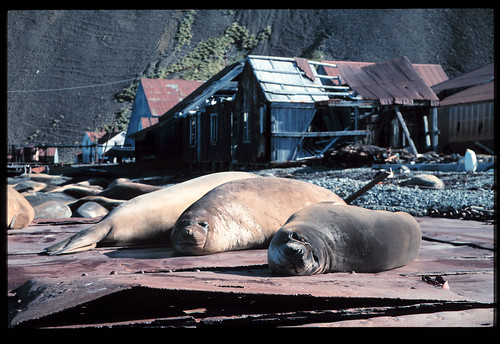
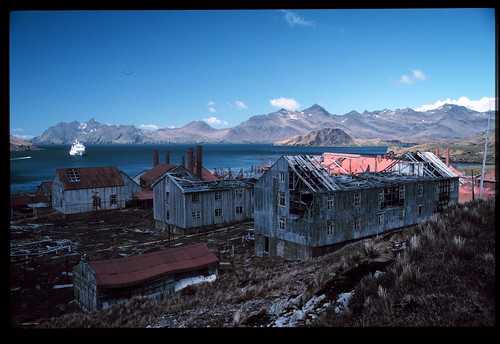
The deserted and abandoned whaling stations of South Georgia

The famous manager's house at Stromness. On 20 May 1916, Sir Ernest Shackleton knocked on this door after his heroic open boat journey from Elephant Island. (Roderick Eime)

The history of whaling in and around South Georgia is a blood-curdling tale of brutality and exploitation that remains a blemish on the environmental record of mankind.

Today the remains of the whaling stations and their supporting infrastructure serve as memorials to this bleak period in history when the world’s great whales were hunted to the brink of extinction by greedy whalers seeking to maximise their catch without any thought for preserving these beautiful animals.


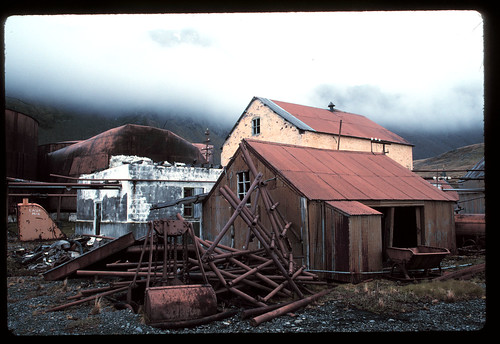
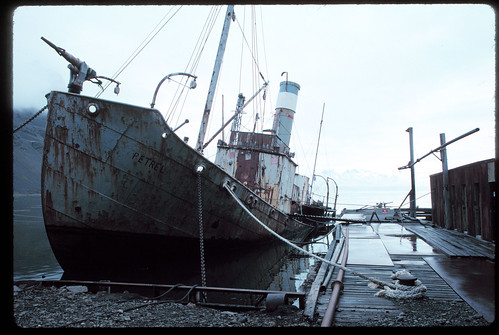
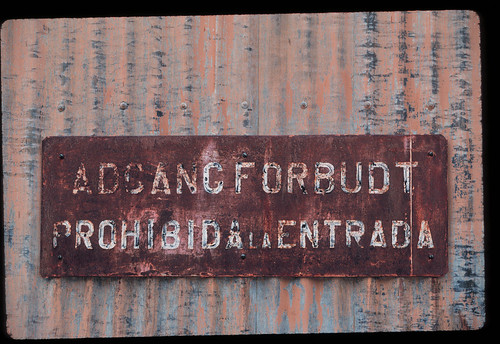
In late 1998, I was fortunate to visit the crumbling stations on these far-flung islands which now attract tourists in ever-increasing numbers. Much of the buildings are in a very poor state of repair and quite dangerous to enter, so these days much of it is roped off for good reason.

Looking for a cruise to South Georgia?
Whaling began on South Georgia at Grytviken in 1904 and continued until whale numbers became uneconomical in the mid-1960s. There were also major bases and facilities at Leith Harbour, Stromness and Husvik which stayed open intermittently until the same time. Other smaller bases were permanently closed prior to WWII.

Many polar explorers used South Georgia as a supply base prior to their Antarctic missions. Most notable among them was Sir Ernest Shackleton, who remains buried there in the whalers’ cemetery. He had died aboard his ship Quest while enroute to South Georgia in 1922. Captain Frank Hurley, Sir Hubert Wilkins and Captain James Cook also have ties to South Georgia, with Cook claiming the islands for Britain in 1775.

Related story: Sub-Antarctic Renaissance 

In April 1982, Argentine salvagers landed at Grytviken and Leith Harbour under the pretense of removing scrap metal, but this turned out to be a prelude to their invasion later that same month. This event was the first spark of the ensuing Falklands War and South Georgia was retaken by British forces on 25 April 1982, during Operation Paraquet.

Grytviken 07-31

Grytviken 06-09

Grytviken 07-32

Grytviken 06-06

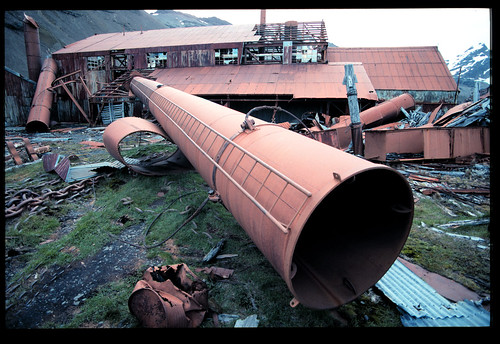
Collapsed smokestack at Stromness, South Georgia

15-24

15-33

16-26

The day Swedish drivers swapped sides


IN his continuing search for the more weird and wondrous in this world, David Ellis says that when Sweden decided to change to driving on the right side of the road 49 years ago this month, over 80% of drivers opposed the idea saying it would result in roadway carnage.

After all, they argued, Swedes had been driving on the left side of the road since the first horses and buggies hit the streets 233 years before in 1734.

But with all neighbouring countries driving on the right-hand side of the road, and the majority of Sweden's vehicles being left-hand drive imports, the government swept aside public opposition, and decreed in 1963 that driving on the right-hand side of the road would become law at 5am on September 3 1967.

A massive education program was initiated called Dagen H (Dagen meaning "day" and H for Hogertrafik "right-hand traffic.") Dagen H logos were printed on everything from milk cartons to bras, 130,000 Dagen H reminder signs erected along roadways nationwide, and Dagen H stickers slapped on anything that moved.

One-way roads, crossings, roundabouts and flyovers had to be redesigned, and 360,000 road signs were changed country-wide. Traffic lights were reversed and road lines repainted during the night before the change-over– and buses had to have new passenger doors cut into their right-hand sides.

Then on September 3 only essential vehicles were allowed from 0100 to 0600, with these forced to stop at 0450, and at 0500 to cross carefully to the other side of the road.

And on the first "working Monday" after, there were 125 non-fatal traffic accidents nationwide – compared with 198 normally.


[] CHANGING from driving on the left-hand side of the road to the right-hand side had its confusion for drivers in Sweden in 1967, but the country survived.


September 26, 2016

Struth! ride the world's longest escalator


Longest escalator rises to the need

IF you want to add riding the world's longest outdoor escalator and moving footway system to your list of achievements, you'll need to go to Hong Kong to do so because the one there is without doubt the world's longest, and takes an extraordinary twenty minutes to ride from end to end.

Covering a whopping 800 metres (around 2,600 feet) and with a vertical rise of 135 metres (443 feet) between bottom and top, it joins the lower Central business district of the city with the higher residential Mid-Levels district by way of eighteen inter-connecting escalators and three inclined moving footways.

Opened in October 1993 at a cost of HK$240m (AU$41m) and more than 150% over-budget, the system was forecast to carry 27,000 people a day, but within ten years double this number were patronising it daily. And currently its closer to 90,000 daily – over three times more than the original forecasts.

Because the route that it follows is so narrow between Hong Kong's high-rises, it has only one "lane" and thus can run in only one direction at a time… so that's downhill from 6am to 10am to get people from the residential Mid-Levels to work and shopping, and then uphill from Central from 10am to midnight to get them home again.

And with locals and the millions of tourists who use it each year also having to get off and then back onto the system where it breaks for the roads it encounters, restaurants, bars and shops have flourished around each of these break points.

- David Ellis

PHOTO CAPTION:


[] HONG KONG boasts the world's longest escalator and moving footway running 800 metres down the side of this narrow pedestrian way between the Mid-Levels residential area and lower Central Business district. (Photo courtesy Maucaine)                                    

September 20, 2016

Mario's life at sea is his business


IN his continuing search for the more weird and wondrous in this world, David Ellis says that while most of us like talking about our week or two going cruising every year or so, businessman Mario Salcedo instead talks about the week or so he spends going ashore every year or so…

Because for the last twenty years, Mario has lived and run his investment advisory and management company year-round from aboard 5-star cruise ships, most of them the luxury liners of Royal Caribbean Lines.

And he reckons he's done nearly 1000 cruises in those 20 years, chalked-up around 6000 nights at sea, and spent in the vicinity of US$1,400,000 doing so. And all after being bitten by the cruise bug at age 45 when he "wanted to discover the world," and setting up his own company to do so.

Booking interior staterooms because he says he only uses them to sleep in, shower and dress, Mario eats only two meals a day for his weight's sake, and does a lot of walking and scuba diving when in port to keep fit… and loves socialising at night either dancing or while enjoying an after-dinner cigar and a cognac.

Mario spends 50 weeks a year at sea, with the other two made up of travel between ports to change ships – or to see his doctor or the bank.

And bizarrely he maintains a condominium in home-town Miami – complete with a maid he drops his laundry off to whenever a ship he is on visits town, and a car he likes to keep handy in the event he might need it on one of those ship visits.


[] MARIO Salcedo has lived and run his investment advisory business year-round from aboard cruise ships for the past twenty years. (Royal Caribbean Lines)

September 05, 2016

Struth! Southern Highlands tulip Wonderland


IN his continuing search for the more eye-catching in this world, David Ellis says that if you're a green thumb and into all things florally and Springtime, the place to head this month is the NSW Southern Highlands.

Because just an hour or so south of Sydney, one of Australia's oldest and most-visited floral festivals will attract something like 65,000 visitors for the 65th annual Tulip Time from September 13th to 25th.

Ablaze at Bowral's famed Corbett Gardens will be 75,000 tulips and 15,000 annuals, and with a theme of Alice in Wonderland, garden bed displays will cleverly depict such scenes as the Mad Hatter's Tea Party, the Cheshire Cat, Big Clock, Playing Cards and more.

And a further 40,000 tulips will add more rainbows of colour to parks and gardens across the Southern Highlands' other major towns of Mittagong and Moss Vale, and a score of surrounding picturesque villages.

On Saturday September 17th a Street Parade through Bowral will include marching bands, floats, vintage farm equipment, street performers, a procession of classic cars – and 140 cyclists who'll have just pedalled down from Sydney raising money for brain cancer research.

As well a heritage steam train will bring scores of other visitors from Sydney for not just the gardens, but the region's internationally-famed street dining and shopping, and a Tulip Time market-place crammed with local foodstuffs and beverages, home-wares, clothing and jewellery… while awaiting wine buffs will be the area's famed boutique wineries.

It's a long way from Bowral's first 500-bulb Tulip Time in 1960; for information and free assistance with booking accommodation call1300 657 559, or visit southern-highlands.com.au to book online.


[] 75,000 tulips and 15,000 flowering annuals in Bowral's Corbett Gardens will be the centre-piece for this month's 65th Southern Highlands Tulip Time festival. (Courtesy Southern Highlands News)


August 16, 2016

Struth: the world's most expensive cheese


Smile 'Cheese' when you see the price

IN his continuing search for the more weird and wondrous in this world, David Ellis says the world's most expensive cheese doesn't come from cows or goats, and you won't find it in the plushest restaurants or finest delis in London, New York or Paris.

Ottawa - Visiting Canada's exciting capital

#MYOttawa #ExploreCanada


story by Roderick Eime with additional text by Ottawa Tourism.

One of the first things told to me by a local is that Ottawa is the city fun forgot. Well, I don't know where they got that idea from because now, on my second visit to the capital, I've found it a most welcoming and vibrant city, with plenty of fun things to do.

Aussies who have travelled to Canada know this already, especially the hordes of young ski bums and bunnies who regularly exchange into the various ski resorts in the country's western regions, that Canadians love us. That Commonwealth affection is similarly returned.

Getting around Ottawa is dead easy. It's a simple city to walk, cabs are easy and there is the famous Uber rideshare just like almost everywhere else. I chose the familiar 'hop on, hop off' double decker tourist bus as seen in so many major cities and tourist destinations. Stamped with 'Lady Dive' signage, the buses have a live guides and make 15 stops at key locations around town.

In a jam-packed summer's day, I join the throngs for a sample of Ottawa's fabulous hospitality and activities.
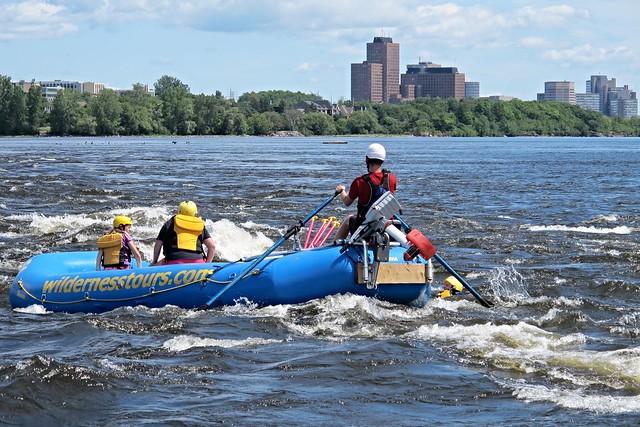
Ottawa River Rafting adventure (R Eime)

My morning is taken up with whitewater rafting, a 3.5-hour trip that departs from Britannia Park (a lovely beach and park about a 15-minute drive west of downtown) and ends just west of the Canadian War Museum and downtown Ottawa. We crash through a series of small whitewater rapids within view of the city skyline in inflatable boats while the daredevils among us do the famous cliff jump and bridge hang. A great family adventure.

Come lunchtime, I was ready for some of Ottawa's famous fare and the place to go is the ByWard Market, one of the oldest and largest farmers’ markets in Canada, as well as the name of the eclectic neighbourhood that surrounds it.
Ottawa’s entertainment district is filled with great restaurants, clubs, bistros, coffee shops, boutiques and food retailers. In the height of summer, up to 175 outdoors stalls sell plants, flowers, fruits and vegetables as well as art and crafts. You’ll find ByWard Market vendors outside, no matter the weather, 363 days per year (closed Christmas Day and New Year’s Day).

Check out some of the staple food shops—some of which have been around since the early beginnings of the Market: Saslove’s Meat Market, House of Cheese, Lapointe Fish, and more. And make sure to visit the ByWard Market Square building, which features a wide selection of food vendors, artisans and boutiques. And don’t miss the cobblestoned courtyards behind the shops of Sussex Drive; from south to north, the Clarendon Courtyard, Jeanne d’Arc Courtyard, Tin House Courtyard and Beaux-arts Courtyard each have their unique charms—from restaurant patios to quirky public art.

My choice is the funky Sidedoor Restaurant, a contemporary kitchen and bar in York where I dine on such novel dishes as tuna sashimi with yuzu marmalade and Thai basil sausage tacos.

There's plenty of choice for the afternoon too, so let's head to The National Gallery of Canada, one of the country’s finest art museums and the permanent home of the world’s most comprehensive collection of Canadian art, including Inuit art. The Gallery sits in one of the most spectacular sites in Ottawa, and its award-winning architecture (designed by Moshe Safdie), features the luminous Great Hall, spacious galleries, and interior gardens and courtyards. You can't miss the iconic Louise Bourgeois sculpture, Maman, a mammoth 9.25m bronze spider.

Back on the bus, it's time for the Canada Aviation and Space Museum, home to the most extensive aviation collection in Canada and one which ranks among the best in the world. Canada’s rich aviation heritage is revealed through exhibits of vintage aircraft from the museum’s permanent collection. Interactive activities, films, demonstrations, and guided tours offer visitors a chance to explore the story of flight. Open-cockpit biplane rides and helicopter rides are offered for an extra fee, weather permitting. The museum is also home to the Canadarm—the mechanical arm used on the NASA Space Shuttle. Star Trek fans can get a dose of their favourite TV series with a special exhibition until mid-September.

Otherwise, I could venture to the Canadian War Museum located along the Ottawa River just west of the Parliament Buildings and downtown Ottawa and a living memorial to Canada’s proud military history—from the earliest days of New France to current-day operations. It features large artifacts such as tanks (including a super rare German Panther) and airplanes, as well as a stunning collection of war art (including a gallery of “nose art” from World War II Lancaster bombers). 

If I have the courage, I might take a tour of local ghost stories and Ottawa's “darker” history when the lights are low and the atmosphere is just right for a good ghost story. The tour guides wear cloaks and carry a lantern as they lead their group from one haunted spot to the next.

Before I head out tomorrow, there's time to join the crowd for the ceremonial changing of the guard up on Parliament Hill or perhaps visit the Diefenbunker, a Cold War shelter built to house the entire government in the event of nuclear attack.

And before you head there, brush up on a little of your high school French as Canadians will be delightfully tolerant of your rusty pronunciation. Even the everyday greeting is “Hello, bonjour”.

Other activities to consider for a fun-filled visit to Ottawa:
  • historic biplane sightseeing flights from the Aviation and Space Museum
  • take a tour of the inside of Parliament’s Centre Block
  • Visit the Bytown Museum to learn about Ottawa’s early history
  • Watch boats as they pass through the Ottawa Locks of the UNESCO-listed Rideau Canal
  • Canadian Museum of History across the bridge in Quebec
  • Take a Rideau (electric) Canal Cruise through downtown Ottawa
The writer stayed at ARC the.hotel, Ottawa’s first boutique hotel to offer comfort and luxury paired with contemporary design in the serene and sophisticated ARC the.hotel. Located in the heart of downtown Ottawa, ARC the.hotel is within walking distance of the major attractions mentioned above. 140 Slater Street, www.arcthehotel.com

For more details on Ottawa attractions and activities, visit www.ottawatourism.ca

July 11, 2016

Struth! World's smallest hotel rooms in NYC Skid Row


Smallest hotel rooms toe the line

IN his continuing search for the more weird and wondrous in this world, David Ellis says you would think that a hotel with the world's smallest rooms, and in the heart of its city's once-Skid Row, would need to do some pretty fancy footwork to promote itself.

But not The Bowery House Hostel in New York City's now-famous The Bowery, that from the 1940s to '90s was home to that city's Skid Row, it's Bowery Bums, notorious street gangs and flophouses.

Because today's The Bowery House concedes that its 110 historic and "compact" rooms have just enough space to shuffle 'tween beds and walls and that some of those beds have even had to be cut-down to under six feet (around 175cm) to fit in. They are even called 'cabins'.

And that while stowing your luggage can be a juggling act, and toilets and showers are shared down the corridor, there's a great rooftop terrace with city views, and there's free Wi-Fi.


NOW that's a small hotel room: One of New York's tiniest
Bowery House Hostel rooms - but location and price
are a magnet for the budget-conscious. (BoweryHouseHostel)
Thus budget-conscious travellers flock to this circa-1920s hotel whose rooms were sub-divided into multiple temporary digs in the 1940s for troops returning from WWII and are still only just big enough today for a single or double bed and side table.

But no longer is the surrounding Bowery district Skid Row, instead its now all trendy shops, bars, cafés and galleries, and just a short stroll to the Lower East Side, Little Italy, SoHo and Chinatown. And with plenty of other major attractions only minutes away by subway.

Prices start from just AU$102 for The Bowery House's most minuscule single-bed rooms. See  www.theboweryhouse.com


Support Traveloscopy - Support Responsible Travel.

Traveloscopy is a freelance journalism enterprise supporting the tourism and travel industries. We aim to encourage people to travel thoughtfully and responsibly and also support sustainable initiatives within the travel sector. You can help us cover our operating costs, even if in just a small way.

Last 30 Days' Most Popular Posts